Author: Dave Burchett

  • The Healing Power of that Silent Night

    The Healing Power of that Silent Night

    One of my favorite Christmas stories happened during the horrors of war. The Christmas carol “Silent Night” was actually responsible for a wartime Christmas truce.

    The year was 1914 and soldiers were having to spend Christmas Eve night on the World War I battlefields of. After only four months of fighting, more than a million men had already perished in the bloody conflict. The bodies of dead soldiers were scattered between the trenches. Enemy troops were dug-in so close that they could easily exchange shouts.

    On December 24, 1914, in the middle of a freezing battlefield in France, a miracle happened. The British troops watched in amazement as candle-lit Christmas trees began to appear above the German trenches. The glowing trees soon appeared along the length of the German front.

    Henry Williamson, a young soldier with the London Regiment wrote in his diary: “From the German parapet, a rich baritone voice had begun to sing a song I remembered my German nurse singing to me…. The grave and tender voice rose out of the frozen mist. It was all so strange… like being in another world — to which one had come through a nightmare.”

    Silent Night
    Holy Night
    All is calm
    All is quiet

    “They finished their carol and we thought that we ought to retaliate,” another British soldier wrote, “So we sang “The First Noël” and when we finished, they all began clapping. And they struck up “O Tannebaum” and on it went… until we started up “O Come All Ye Faithful” [and] the Germans immediately joined in …. this was really a most extraordinary thing — two nations both singing the same carol in the middle of a war.”

    Christmas truce

    It is recorded that enemy soldiers greeted each other in the no man’s land that was a killing zone the day before. The soldiers wished each other Merry Christmas and agreed not to fire their rifles on Christmas Day. The spontaneous cease-fire eventually embraced much of a 500-mile stretch of the Western Front. According to the reports of soldiers at the scene, hundreds of thousands of soldiers celebrated the birth of the Prince of Peace among the bodies of their dead.

    Christmas truce

    Other soldiers told of how the “enemies” exchanged badges and buttons from their uniforms. Others shared photos of wives and children and some even exchanged addresses and promised to write after the war ended.

    But the miracle of peace was temporary. Slowly, under threats from their officers, the troops returned to the trenches and the recoils of rifles split the temporary “Silent Night.” Some soldiers admitted aiming so their bullets flew well above the heads of the “enemy.”

    Perhaps those of us who celebrate the birth of the Savior could learn a lesson from this Christmas miracle as we engage those who do not share our beliefs and faith in Jesus. Those on the other side of the cultural trenches are not unlike us. The message delivered in Bethlehem was peace and goodwill toward all men. When we fight the cultural war we need to remember that the whole purpose of Jesus invading our space and time was to love and ultimately die for those on both sides of the battle. During the recent Army/Navy football game I was deeply moved by this observation.

    “This is only game where everyone on the field is willing to die for everyone watching them play”

    Jesus was willing and did die for everyone on both sides of our cultural trenches and ugly personal warfare. Perhaps the biggest miracle of that Silent Night was how the power of a unified focus on Jesus can unite even bitter enemies. My heart aches as I see Christians splitting ranks over things that don’t amount to a hill of beans on an eternal scale. I picture Jesus weeping over the churches of America like He wept over Jerusalem. I picture Him weeping over how Christians in this country divide over non-essentials and fail to communicate the joy and life-changing power of the good news of the gospel. Jesus gave this final command to His followers…

    “So now I am giving you a new commandment: Love each other. Just as I have loved you, you should love each other. Your love for one another will prove to the world that you are my disciples.”
    John 13:34-35 – NLT

    Pretty straight forward. Nothing in there about personal gain, power, or prestige. The power of what happened on that Silent Night united enemies centuries later on a French battlefield.  My Christmas prayer is that the miracle of God becoming man will unite you and me, His followers, to seek what actually matters. To really make it about Christ and not about us. While we still have the chance.
     

    Interested in connecting more with God and one another?

  • The Cattle Were What?????

    The Cattle Were What?????

    One of my contributions with these modest little musings is to continually ask the tough questions.

    While listening to  “Away in a Manger” my inquiring mind kicked in. You likely know verse three of the song.

    The cattle are lowing
    The poor Baby wakes
    But little Lord Jesus
    No crying He makes

    As I listened an important series of difficult and probing inquiries popped into my head. What noise, exactly, were the cattle making when they started lowing? Was this normal cow talk? Did lowing just sound better than mooing in the lyric or is lowing a more spiritual and reverent cow sound? And then the most important question came to mind. What is wrong with me?

    I can’t answer the last question but I can help with the others. Lowing is defined at dictionary.com as “the characteristic sound uttered by cattle; a moo”.

    So little baby Jesus was awakened by the characteristic sound uttered by a cow. That would not have flowed well in the lyric so I understand using lowing. The next part of the song is disturbing to those of us who are parents. If any of the babies who grew up in our household were awakened by cattle lowing they would be squalling (defined as “the characteristic sound uttered by a ticked off baby; a scream”).

    I remember as a child singing “Away in a Manger” and picturing the baby Jesus with this beatific smile on his face and a little halo hovering over his head. In my imagination the animals were swaying and singing like the campfire scene from the movie “Three Amigos”.  My images of the baby Jesus were indeed childish. But I wonder if we don’t carry a little of that flawed perspective about the “Baby Jesus” into our adult Christian journey.

    This Christmas why not take a little time to think about the implications of the incarnation. That nice little theological word is used to denote when the second person of the Trinity assumed human form in the person of Jesus Christ and became both fully God and fully man. C.S. Lewis called the incarnation “the Grand Miracle.” He wrote: “The central miracle asserted by Christians is the Incarnation…. Every other miracle prepares for this, or exhibits this, or results from this…. It was the central event in the history of the Earth–the very thing that the whole story has been about”.

    By a miracle that passes human comprehension, the Creator entered his creation, the Eternal entered time, God became human–in order to die and rise again for the salvation of all people. “He comes down; down from the heights of absolute being into time and space, down into humanity; down further still … (to) the womb … down to the very roots and sea-bed of the Nature He has created. But He goes down to come up again and bring the whole ruined world up with Him” (Miracles, C.S. Lewis).

    Take a moment to meditate on the mystery of that. Fully God and fully man. I am sure the little Lord Jesus would have had the normal response to being awakened by any cow noise…lowing or other. His swaddling clothes had to be changed just like any baby.

    How does that affect me this Christmas? Because God became flesh I can relate to a Savior that understands the frailties of my flesh. Because the Creator understands His creation I can be sure that God understands my pain, frustration and loneliness. It is difficult for me to relate to an invisible God. That is the miracle of God becoming man. I can relate to Jesus because He has walked in my sandals. Joni and I were always appreciative and blessed when people expressed love and care while she was battling breast cancer. But when a breast cancer survivor expressed that love it connected on a different level. They had been there, felt the fear, fought the tiring battle and traveled the long road. That is the sovereign genius of the incarnation. We can relate to God in flesh in a way that is different. When I suffer I know that Jesus understands. He has been there. When I am lonely or feeling betrayed I can know (in my finite ability) that He understands. When I am joyful and laughing He understands. By becoming like me I can believe that Jesus can empathize with me on a different level. Because I know He gets it then I also get it. God loves me and Jesus has my back.

    My dear children, I am writing this to you so that you will not sin. But if anyone does sin, we have an advocate who pleads our case before the Father. He is Jesus Christ, the one who is truly righteous. (1 John 2, NLT)

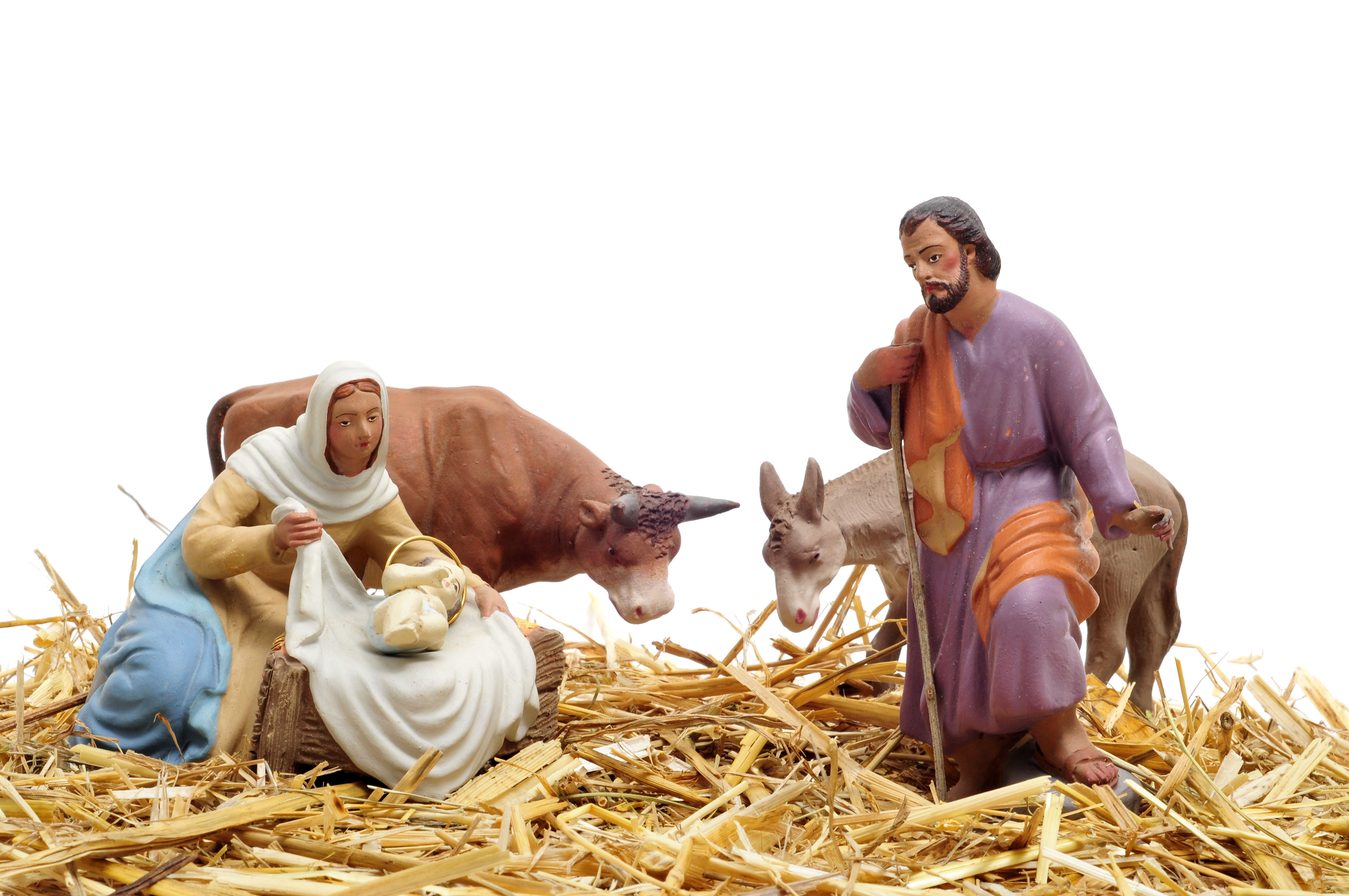
    Jesus became our advocate and our path to salvation when He arrived on earth. The miracle in the manger was not Jesus ignoring whatever cow sound they were  making. The miracle was God becoming flesh.

    You can get a personalized autograph plate for Stay: Lessons My Dogs Taught Me about Life, Loss, and Grace or Waking Up Slowly. Click here for details.

  • Looking for a Unique Gift for Christmas?

    Looking for a Unique Gift for Christmas?

    Looking for a truly unique gift idea? How about giving a personalized edition of Stay:Lessons My Dogs Taught Me about Life, Loss, and Grace or Waking Up Slowly to a friend or family member.

    Just go to your local Barnes and Noble, Christian book store or order one or both online. Send me your mailing address and how you want the book/books signed. I will mail you an autograph plate(s) that you can affix inside the book.

    Autograph Plate

    Simple and very personal!

    Send your requests to dave@daveburchett.com or private message me on Facebook with your mailing info and requests. The deadline is December 17th so hurry!

    Merry Christmas!

    Dave Burchett

  • All I Want for Christmas is…

    All I Want for Christmas is…

    Amy Grant recorded “My Grown-up Christmas List” for her “Home For Christmas” album. The lyrics imagine an adult going back to Santa with a different perspective on what matters most in life. Instead of material things the writer now asks for good things for others. I love the sentiment of the song.

    No more lives torn apart
    That wars would never start
    And time would heal all hearts
    Everyone would have a friend
    And right would always win
    And love would never end
    This is my grown-up Christmas list

    I thought about my “grown-up” Christmas list this week. I would love for all of the things in the lyric above to come true. But I have lived enough to know they will not. Everyday lives are torn apart. Wars start too frequently. Time does not heal every heart. Some who are reading this are lonely. Right seems to lose way too often and love ends for many.

    So what could I wish for that would be available for all? My grown-up Christmas list would have one simple wish. That every person would truly understand the outrageous grace gift that God offers to each one of us. All we have to do is open that gift in faith. Christmas is when the gift came to earth wrapped in swaddling clothes.

    I wish that everyone who hears the Gospel message would comprehend the one way love that God demonstrated. Instead of turning His back on sinners who deserved just that God chose to reach out to His creation with a radical plan for forgiveness. A plan that is unlike any other religion in history. Man made religion always demands something to earn salvation. God’s plan for redemption requires the lost to bring nothing to the table other than their sin and the need for salvation. Nothing.

    God saved you by his grace when you believed. And you can’t take credit for this; it is a gift from God. Salvation is not a reward for the good things we have done, so none of us can boast about it. (Ephesians 2:8-9, NLT)

    Not a single requirement other than believing. A gift of grace. Grace that is so vast and inexhaustible that no sin or sinner can exceed the scope of this amazing grace to cover their sin and redeem them. I coined an acronym for grace that only partially captures the enormity of God’s love.

    God’s Radical And Complete Embrace.

    God initiates salvation. The plan is so radical that it feels otherworldly. Salvation is complete and God’s embrace shows His desire to know us as His beloved children.

    I wish that everyone who believes the Gospel would truly believe that they are a brand new creation. Recreated as a saint with complete freedom in Christ. Adopted as a child of God. Forgiven forever. And that all of those things are completely true because of Jesus.

    I wish I could give those things to everyone on my list. Life will give us sadness, loss and loneliness but trust in Jesus gives us hope in the darkest storm. It started with the baby we celebrate at Christmas..

  • The Most Important Thing in the Church

    The Most Important Thing in the Church

    This week the Most Valuable Players in Major League Baseball were announced and it reminded me of a former baseball MVP. I have written a lot about how people in the church do considerable damage with actions and words that do not reflect Jesus. I have been frustrated by Christians who receive grace willingly and deny it to others. I see division in the body of Christ where we should see unity. It occurred to me that the church does not understand a few key principles that winning baseball teams understand. The first thing that winning teams understand is that every teammate brings strengths and weaknesses to the team. A great team celebrates the strengths of each player and works together to offset the weaknesses. I pondered this as I was reading about the career of Joe Gordon. In 1942 Gordon led the American League in strikeouts. He made more errors that year than any other second baseman. He hit into more double plays than anyone in the league. By dwelling on those stats we could surmise that the New York Yankees were looking for a new second baseman for the following year. But there was one mitigating factor.

    Gordon won the American League Most Valuable Player for that season.

    In spite of the flaws mentioned above Joe Gordon had a great season. He batted .322, fourth in the AL, with 18 homers and 103 runs batted in. Gordon teamed with Phil Rizzuto to lead the league in double plays turned defensively. In 1942 Joe Gordon was deemed to be the MVP of the league despite some obvious weaknesses in his game. Great managers and good teammates know that every player has strengths and every player has weaknesses.

    And that is the lesson I was thinking about for the church. Too often we dwell on the weakness and not the gifts that God has given others. Or we acknowledge the gifts but make sure to note the weaknesses. All of us are a mix of gifts and flaws. The first mention of spiritual gifts is in Paul’s letter to the Roman church.

    I long to see you so that I may impart to you some spiritual gift to make you strong— that is, that you and I may be mutually encouraged by each other’s faith.

    Commentators note that the translation here might be a bit confusing. The text might sound as if Paul’s giving away spiritual gifts to the first ten callers. A better translation might be that Paul wants to use his spiritual gifts to strengthen and encourage others. I believe that every single Christian is given spiritual gifts. We are given those gifts for many reasons but two of the primary ones are to glorify God and strengthen one another. But I wonder if we sometimes look at our spiritual gifts as something that we have the right to exercise for our personal fulfillment and glory? I am sure Joe Gordon often struck out when his team needed a hit. I suspect he sometimes made an error when the pitcher threw a good pitch and should have gotten an out. But his teammates (and the rest of the league) saw his gifts. Base runners batted in and key home runs hit. A vital double play turned and great range at his position. That is what made him valuable to a winning team. His strengths were vital to the team winning. His flaws were compensated by the team working in unity toward the goal of the World Series.

    Do we do that in the church? Or do we choose to focus on the flaws of others? The World Series is a wonderful goal but it pales in comparison to the goal that Jesus challenged us to pursue.  Do we understand what it means to be unified for the common goal expressed so succinctly in the Gospel of Matthew?

    Therefore, go and make disciples of all the nations, baptizing them in the name of the Father and the Son and the Holy Spirit. Teach these new disciples to obey all the commands I have given you. And be sure of this: I am with you always, even to the end of the age.

    That is the game plan. Each of us has been given gifts to contribute. Each of us has flaws. Can we pray that we will be mature enough to focus on Who unites us instead of what divides us? Even the MVP of the American League had shortcomings. So will the pastor, elder, committee member, and volunteer chairman as we pursue the Great Commission of Christ. Another thing that winning teams understand. You don’t have to be best friends with everyone on the team but you do have to be united for the common goal of the team. Jesus prayed for unity for those who follow Him.

    May they experience such perfect unity that the world will know that you sent me and that you love them as much as you love me. (John 17:23, NLT)

    My prayer is simple.

    God give us the grace to be unified as a team for your glory. Teach us to use our gifts to strengthen one another and glorify you. Give us the strength to be a good teammate  and the humility to believe that it cannot be about me for the team to succeed. Give me the desire to be a good teammate in the body of Christ. Teach me to see and exalt the gifts of my brothers and sisters even if they compete with my own talents. And especially teach me to be graceful with the flaws of others. We are all gifted and we are all flawed. A team understands that truth. Help us to do the same for the sake of the body of Christ.

    Amen.

    Parts of this blog were excerpted from Stay: Lessons My Dogs Taught Me about Life, Loss, and Grace

  • The Beauty of Refining Trials

    The Beauty of Refining Trials

    My lovely wife loves pottery, so one of my “sacrificial” ways to love Joni is to accompany her to pottery shops. Guys refer to that as “hitting behind the runner” or “taking the charge.” Once we visited a shop where the artisans were making vases and pots right before our eyes, surrounded by shelves of the colorful, beautiful, and functional finished products.

    While Joni looked around, I watched a potter take a nondescript lump of clay and skillfully make a unique creation. This verse from Isaiah came to mind.

    O Lord, you are our Father.
    We are the clay, and you are the potter.
    We all are formed by your hand.  (Isaiah 64:8)

    I was fascinated by the complexity of the process. The potter must make sure that no dirt or impurities are in the clay. These unwanted materials will make the pot weak and unusable for its intended purpose. God desires to do the same with us. Impurities (sin) weaken us and keep us from our intended purpose.

    The potter kneads the clay to ensure that there are no air bubbles, otherwise the pot might crack when fired in the kiln. In my life, my “air bubbles” are pockets of resistance when I decide I must control my destiny instead of trusting God. I can appear to be molded and conformed to God’s image, but I have unseen “bubbles” of pride and anger and control. These self-generated bubbles can cause me to crack under the heat of adversity.

    The metaphors that Scripture uses are so powerful when we take the time to understand context and culture. The newly formed pottery, called “greenware,” is carefully placed on a shelf to air-dry before the next step. It is brittle and easily broken. Something else needs to happen to permanently set the object’s shape and make it strong and usable. The clay must endure the fire of the kiln.

    Trials by fire can have that same effect on us as followers of Jesus. Trials can make us stronger and set our shape as His followers. Or, if we are unprepared, the fire of life’s trials can cause us to crack and make us useless for His plan.

    I can choose to be content in my “greenware” state, brittle and useless for service. But God knows that it is in the trials of fire that we are strengthened and most effective. It is nearly always in that uncomfortable adversity that the true beauty of our creative process is revealed. I cannot think of an instance of significant growth in my life that has happened without the refining heat of trials.

    There are a couple of huge differences between the earthly potter and God as the Potter. When the earthly potter finds a bad piece of clay, he discards it. Our heavenly Potter patiently works with us even when we seem misshapen and worthless. A shattered piece of pottery is often thrown out or repurposed in some way. Only our heavenly Father can take the shards of our brokenness and reshape us into something beautiful and effective for Him.

    The words of the apostle James make more sense in the context of the Potter’s process.

    Consider it pure joy, my brothers, whenever you face trials of many kinds, because you know that the testing of your faith develops perseverance. (James 1:2-3, NIV)

    There is no joy in the trial, but there is joy in the knowledge of how God uses such events in our lives. If you are in the midst of a trial or about to face a trial, take comfort that God desires for you to emerge strengthened and beautiful and useful. One potter said that the greatest thing about making pots is that each lump of clay has near-infinite potential. The lump of clay that is me and the lump of clay that is you have infinite potential because we have an infinite God who is patient and good. We should not fear or run from the dark moments. What happens when we walk through them is worth the cost.

    An excerpt from Stay: Lessons My Dogs Taught Me about Life, Loss, and Grace. Check it out here.

  • We All Serve Something

    We All Serve Something

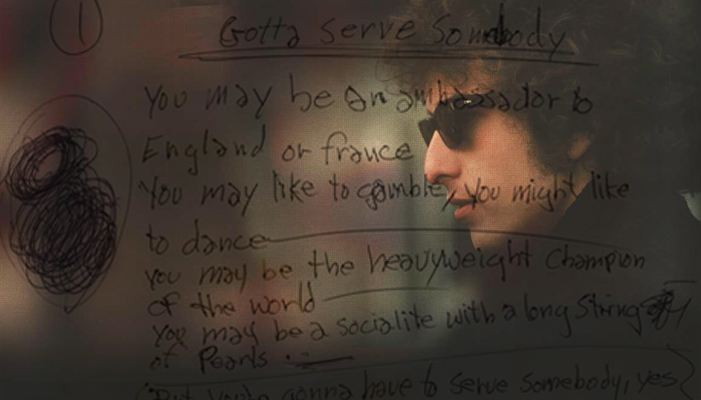
    Bob Dylan wrote some powerful songs about his faith journey in the late 70’s. One song he composed popped up on the music feed recently. “Gotta Serve Somebody” simply says that no matter how independent, self-sufficient or in control we might try to be we still serve something or somebody.

    But you’re gonna have to serve somebody, yes indeed
    You’re gonna have to serve somebody
    Well, it may be the devil or it may be the Lord
    But you’re gonna have to serve somebody

    That lyric struck a spiritual chord because it reminded me of some seriously head and heart messing stuff I have been reading from Tim Keller. Keller wrote a thought provoking definition of idolatry and how we can substitute even good things for God.

    “Sin is building your life and meaning on anything, even a very good thing, more than on God. Whatever we build our life on will drive us and enslave us. Sin is primarily idolatry.” (Tim Keller, “Talking About Idolatry in a Postmodern Age,” www.thegospelcoalition.org)

    That is disturbing for a guy who was taught from childhood that sin is simply a list to check off to validate my righteousness. That list contained but was not limited to movies, liquor, cigarettes, dancing, shacking up, long hair and rock and roll. I thought I was doing pretty well on the idolatry commandment.

    Tim Keller’s definition of sin takes all of the fun out of self-righteous comparison and judging.

    Here is another toe-stomper from Tim Keller. “If our identity is in our work, rather than Christ, success will go to our heads, and failure will go to our hearts.”

    Who I am serving today and where I place my identity will define my actions and reactions. I wrote this in Waking Up Slowly.
    My worth is not in always being right or being the smartest guy in the room. My worth is defined by being a child of God and a friend of Jesus. When I keep my eyes on Jesus, I maintain a better perspective on every area of my life.
    It is a hard truth to admit that we often worship the things of this world because they really can be good things. God in His loving grace does not desire for us to be deprived of good and pleasurable things. He simply wants us to place them in proper order and to understand they are sources of happiness and not the source of joy. Later in the passage Paul gives one key to avoiding idolatry and where our identity should be found.

    Put on your new nature, and be renewed as you learn to know your Creator and become like Him. In this new life, it doesn’t matter if you are a Jew or a Gentile, circumcised or uncircumcised, barbaric, uncivilized, slave, or free. Christ is all that matters, and He lives in all of us. (Colossians 3:10-11, NLT)

    Your assignment is to take a moment to read verses 12-17 to see what the results of this action might look like. There will not be a quiz.

    Another key is to remember a campfire song from the Jesus movement that was, to borrow the approach of Law and Order, “ripped” from the Gospel of Matthew. (Matthew 6:33)

    Seek ye first the kingdom of God, and his righteousness;
    and all these things shall be added unto you.
    Allelu, alleluia

    Everybody is going to serve somebody or something. Who (or what) are you centering your life on today? I choose today to serve Jesus. I can’t do this by myself.