Category: Weekend Wildcard

  • Weekend Wildcard: Blessings Are Not Always Obvious

    A very dear friend is going through a deep trial. This faithful follower prays for wisdom, guidence, assurance and peace. The result so far is confusing. When they pray to hear the voice of God they hear spiritual crickets. Nothing. The frustration is real. I want to do something to help and all I can offer is prayer and presence.

    Problems Ahead

    But when we study how God works in our lives should we be surprised with the process? A song by Laura Story resonated with my soul on a recent walk. The song is called “Blessings” and the words are profound.

    We pray for blessings
    We pray for peace
    Comfort for family, protection while we sleep
    We pray for healing, for prosperity

    There is nothing inherently wrong with praying for those things. But my attempt to maneuver God to grant my wishes is wrong. Laying out my will and praying for God’s notary seal is not what He desires. Blessings are not just receiving good things from God and that truth is beautifully captured by Story’s lyrics.

    ‘Cause what if your blessings come through raindrops
    What if Your healing comes through tears
    What if a thousand sleepless nights are what it takes to know You’re near
    What if trials of this life are Your mercies in disguise

    Her lyrics come out of learning to trust the object of her worship even through the trials. Her website bio describes her journey.

    But amidst that success a brain tumor hospitalized her husband in 2006. The faith Story sang about was put through the unexpected fires of fear and loneliness; most young newlyweds don’t imagine being kept alive at one point by breathing machines or having to find their way through significant post-operative vision and memory loss. Could grace notes resound from such a life-altering struggle?

    We know that pain reminds this heart
    That this is not our home

    Story relates the question she faced during the health crisis she faced with her husband.

    “But there’s a decision that I find God is asking us to make: whether we are going to choose to interpret our circumstances based on what we hold to be true about God, or whether we’re going to judge what we hold to be true about God based on our circumstances.”

    Our faith is not based on feelings or circumstances or checking off items on the prayer list. Our faith is based on the object of our faith. God is faithful. He hears our cries. But sometimes the answer is not what we desire. Paul learned the same thing and he wrote about it to the church in Corinth. You likely know the passage. Paul was given “a thorn in the flesh” that he begged three different times to be removed. Paul had a pretty strong signal on the Faith-o-meter. Five bars. But God said no. I like the translation from The Message.

    Because of the extravagance of those revelations, and so I wouldn’t get a big head, I was given the gift of a handicap to keep me in constant touch with my limitations. Satan’s angel did his best to get me down; what he in fact did was push me to my knees. No danger then of walking around high and mighty! At first I didn’t think of it as a gift, and begged God to remove it. Three times I did that, and then he told me,

       My grace is enough; it’s all you need.
    My strength comes into its own in your weakness.

    Once I heard that, I was glad to let it happen. I quit focusing on the handicap and began appreciating the gift. It was a case of Christ’s strength moving in on my weakness. Now I take limitations in stride, and with good cheer, these limitations that cut me down to size—abuse, accidents, opposition, bad breaks. I just let Christ take over! And so the weaker I get, the stronger I become.  (2 Corinthians 12, The Message)

    The gift of a handicap? Are you kidding me? But as I look back on the deep valleys and trials of my journey I see God’s hand and my growth through those events. Blessings from the pain? Without question. And I am learning the truth of Laura Story’s experience.

    What if trials of this life
    The rain, the storms, the hardest nights
    Are your mercies in disguise?

    More and more I am realizing that they are.

  • Weekend Wildcard  : Where Does Healing Begin?

    Weekend Wildcard : Where Does Healing Begin?

    I interact with a lot of wounded people. My books and a big hunk of my writing have been directed toward those who are beaten up by life, religion and too often by other people in the church. There is a better way. A song titled “Where The Healing Begins” by one of my favorite groups, Tenth Avenue North, describes that way.

    So you thought you had to keep this up
    All the work that you do
    So we think that you’re good
    And you can’t believe it’s not enough
    All the walls you built up
    Are just glass on the outside

    All of those years of working hard (and then harder) to be Godly and I found out to my great sadness that it wasn’t enough.  Not only was self-effort not enough it was counterproductive to my desire to experience God’s presence and love. The walls so carefully constructed were, in fact, see-through to those who really knew me well. I picture that in my sadness and tiredness God smiled. He didn’t smile because I was suffering or sad. He smiled because I was finally ready for grace. At the point of brokenness I was ready for the healing to begin.

    So let ’em fall down
    There’s freedom waiting in the sound
    When you let your walls fall to the ground
    We’re here now

    This is where the healing starts
    When you come to where you’re broken within
    The light meets the dark

    Coming to the point where I was broken and realizing my own inability to walk this journey of faith is where the healing began for me. Letting the walls down and trusting God and others with who I really am is where the healing continued. Understanding and trusting that I am completely forgiven and my past is completely forgotten is where the healing became real. Knowing that Jesus loves me desperately on my worst day is where the healing began to translate to the daily walk.

    Afraid to let your secrets out
    Everything that you hide
    Can come crashing through the door now
    But too scared to face all your fear
    So you hide but you find
    That the shame won’t disappear

    For too many years I danced that awkward and ugly dance of hiddenness and shame.  For so many anguished years I thought that if I was a better Christian this wouldn’t, this couldn’t, be happening. If I prayed/studied/fasted/read/attended more church events I would be more Godly. I was depending on the wrong source.

    When you come to where you’re broken within
    The light meets the dark
    Sparks will fly as grace collides
    With the dark inside of us
    So please don’t fight
    This coming light
    Let this blood come cover us
    His blood can cover us

    This is where the healing begins

    healing

    I love the image of grace invading the darkness and sparks of healing flying as the truth about me was set free. I am a child of God who is deeply loved. For decades I lived with a God who I suspected had a contractual obligation to love me because of Jesus but who was generally disgusted with me. I fought grace because it seemed too easy. Not spiritual. Not enough sacrifice. Not enough obedience. Not enough…me. Paul wrote this to the Church at Ephesus.

    God saved you by his grace when you believed. And you can’t take credit for this; it is a gift from God.   Salvation is not a reward for the good things we have done, so none of us can boast about it. For we are God’s masterpiece. He has created us anew in Christ Jesus, so we can do the good things he planned for us long ago. (Ephesians 2, NLT)

    My fear of punishment led to strained and inconsistent compliance with a law I couldn’t possibly keep. Grace and forgiveness have led to joyful obedience nourished by gratitude and love. That is the product of the healing power of grace and I second my brother from Taursus. I can take NO credit for this.

  • Weekend Wildcard – Who Are You Serving?

    Weekend Wildcard – Who Are You Serving?

    Bob Dylan wrote some powerful songs about his faith journey in the late 70’s. One song he composed popped up on the iPod recently. “Gotta Serve Somebody” simply says that no matter how independent, self-sufficient or in control we might try to be we still serve something or somebody.

    But you’re gonna have to serve somebody, yes indeed
    You’re gonna have to serve somebody
    Well, it may be the devil or it may be the Lord
    But you’re gonna have to serve somebody

    serving

    That lyric struck a spiritual chord because it reminded me of some seriously head and heart messing stuff I have been reading from Tim Keller. Keller wrote a thought provoking definition of idolatry and how we can substitute even good things for God.

    “Sin is building your life and meaning on anything, even a very good thing, more than on God. Whatever we build our life on will drive us and enslave us. Sin is primarily idolatry.” (Tim Keller, “Talking About Idolatry in a Postmodern Age,” www.thegospelcoalition.org)

    That is disturbing for a guy who was taught from childhood that sin is a list that included but was not limited to movies, liquor, cigarettes, dancing, long hair and rock and roll.

    Tim Keller’s definition of sin takes all of the fun out of self-righteous comparison and judging. As I read Keller’s examples of idolatry I saw how these subtle traps have played out with my family, friends, and colleagues. Most convicting of all I saw how chasing good things more than God has caused pain and brokenness in my own life. Here are Keller’s thoughts from his book, “The Reason for God”.

    If you center your life and identity on your spouse or partner, you will be emotionally dependent, jealous, and controlling. The other person’s problems will be overwhelming to you.

    If you center your life and identity on your family and children, you will try to live your life through your children until they resent you or have no self of their own. At worst, you may abuse them when they displease you.

    If you center your life and identity on your work and career, you will be a driven workaholic and a boring, shallow person. At worst you will lose family and friends and, if your career goes poorly, develop deep depression.

    If you center your life and identity on money and possessions, you’ll be eaten up by worry or jealousy about money. You’ll be willing to do unethical things to maintain your lifestyle, which will eventually blow up your life.

    If you center your life and identity on pleasure, gratification, and comfort, you will find yourself getting addicted to something. You will become chained to the “escape strategies” by which you avoid the hardness of life.

    If you center your life and identity on relationships and approval, you will be constantly overly hurt by criticism and thus always losing friends. You will fear confronting others and therefore will be a useless friend.

    If you center your life and identity on a “noble cause,” you will divide the world into “good” and “bad” and demonize your opponents. Ironically, you will be controlled by your enemies. Without them, you have no purpose.

    If you center your life and identity on religion and morality, you will, if you are living up to your moral standards, be proud, self-righteous, and cruel. If you don’t live up to your moral standards, your guilt will be utterly devastating. (Tim Keller, The Reason for God (Dutton, 2008), pp. 275-276)

    Ouch. I mean seriously. Ouch.

    Paul wrote these words to the Church at Colossae on the topic of idolatry.

    “Don’t be greedy, for a greedy person is an idolater, worshiping the things of this world.” (Colossians 3, NLT)

    It is a hard truth to admit that we often worship the things of this world because they really can be good things. God in His loving grace does not desire for us to be deprived of good and pleasurable things. He simply wants us to place them in proper order. Later in the passage Paul gives one key to avoiding idolatry.

    Put on your new nature, and be renewed as you learn to know your Creator and become like Him. In this new life, it doesn’t matter if you are a Jew or a Gentile, circumcised or uncircumcised, barbaric, uncivilized, slave, or free. Christ is all that matters, and He lives in all of us. (Colossians 3:10-11, NLT…take a moment to read verses 12-17 to see what the results of this action might look like)

    Another key is to remember a campfire song from the Jesus movement that was, to borrow the approach of Law and Order, “ripped” from the Gospel of Matthew. (Matthew 6:33)

    Seek ye first the kingdom of God, and his righteousness;
    and all these things shall be added unto you.
    Allelu, alleluia

    Everybody is going to serve somebody or something. Who (or what) are you centering your life on today? If it is anything other than Jesus you are off center.

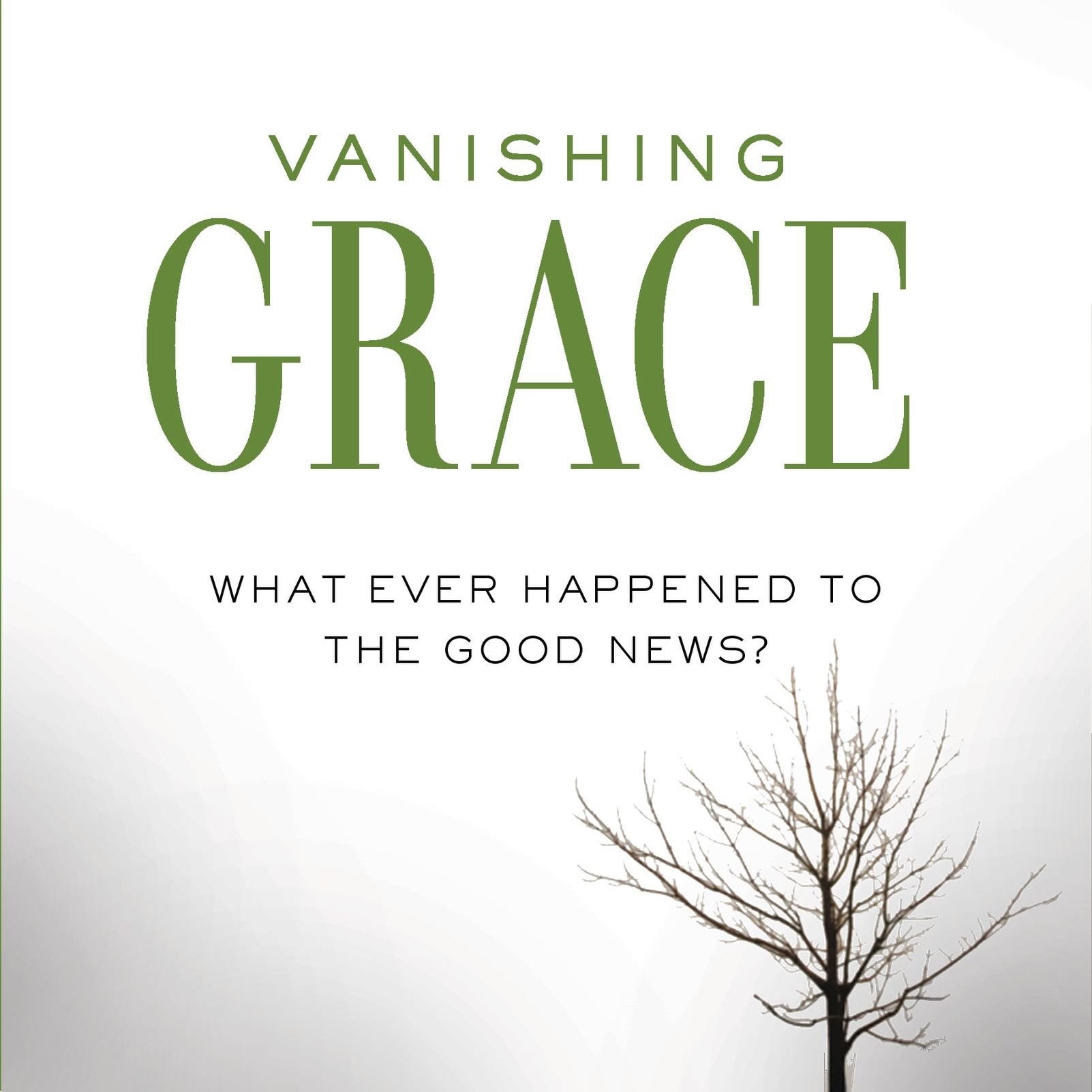
  • Weekend Wildcard – Vanishing Grace?

    Weekend Wildcard – Vanishing Grace?

    Philip Yancey always challenges me with his writing. He is the writer I want to be when I grow up. I have recently started his newest book Vanishing Grace : Whatever Happened to the Good News?. As usual, Yancey does not disappoint.

    I learned about the book from an interview in Christianity Today. Philip Yancey has written over a dozen best selling books and one of those is What’s So Amazing about Grace? I found the first question of the interview fascinating.

    Why did you choose to revisit the subject of grace?

    I know why the interviewer made the inquiry. You want “new” material from an author. Why plow the same ground? But I think that question is a mirror to one of the big problems in the Christian community. We never get past our daily need to revisit grace and the Good News of the Gospel. Martin Luther said that “you should preach the Gospel to yourself daily.” Why? Because you and I forget the depth and the power of grace everyday.

    Yancey’s response was thought provoking.

    Sociologist and researcher Amy Sherman has said that Christians tend to have three models for interacting with society: fortification, accommodation, and domination. To put that in layman’s terms: We hunker down amongst ourselves, water down our witness, or beat down our opponents. For many reasons, those aren’t New Testament models.

    So what should we be? We need to create pioneer settlements that show the world a different, grace-based way of living.

    That is brilliant both in diagnosis and prescriptive cure. Can you imaging the power of truly grace-based living in this wounded and desperately thirsty culture?

    His next observation parallels the message that I have awkwardly been trying to communicate in my decade plus of writing.

    We hear nowadays about Christian groups losing university recognition or public prayers and Christmas displays being banned. We feel on the defensive and that we’re the outliers. But much of Christian history has been lived this way, like it was during the Roman Empire, when a small number of Christians modeled another way to live. In a culture like ours, we need to demonstrate first how faith in Christ makes a difference in how we live.

    Simply put, when we encounter people resistant to our message we must show them grace and the source of that grace, Jesus. I wrote about how this ragamuffin band of Jesus followers went from cultural curiosity to world changing movement in my book When Bad Christians Happen to Good People. One key component was selfless service.

    Remember that the early Christians lived in a pagan culture that featured infanticide and gladiator combat. The early church’s revolutionary view of the value of life was sacrificially demonstrated during the two great plagues that devastated the Empire in the second and third centuries. While pagans avoided any contact with the sick and even cast them into the streets while still alive, Christians nursed and cared for the sick even though it cost some their lives. The selfless service of the early church won many converts to the fold.

    Against all odds and with no cultural advantage the early followers of Christ made a difference. Yancey concluded his interview with this thought.

    We’re tempted to rely on passing laws and winning arguments, but in the end, they’re not the greatest powers. The greatest power is what Jesus did. He died and rose again. That’s where it all started. The more we act like Jesus, not beating people down but showing a better way to live, the more outsiders will look back and say, “Those Christians are different.”

    There is a better way to live. Lord Jesus, give us the grace to show it.