Tag: Jesus

  • Soul Music…Soul Searching

    Soul Music…Soul Searching

    I love the power of song lyrics to touch the heart. A song by Percy Sledge brought a spiritual connection to an old favorite tune. “When a Man Loves a Woman” reached number one on both the Billboard Hot 100 and the R&B charts in 1966. I remember when I fell in love with my beautiful wife. I totally identified with these lyrics in those halcyon days of young love.

    When a man loves a woman
    Can’t keep his mind on nothin’ else
    He’d trade the world
    For a good thing he’s found

    When a man loves a woman
    Spend his very last dime
    Trying to hold on to what he needs
    He’d give up all his comforts
    And sleep out in the rain
    If she said that’s the way
    It ought to be

    I give you everything I’ve got (yeah)
    Trying to hold on
    To your precious love

    Could there be a more powerful description of how it feels to be giddy in love? You really can’t think of anything else but your new love. I reflected on this song in the context of my relationship with God. When I first became a Christian I was so happy, so relieved, and so grateful for His forgiveness. I really couldn’t keep my mind on nothin’ else except this new relationship with Jesus. I was so sold out to my relationship with God that I believe I would have traded the whole world for the good thing I’d found. But, much like romantic love, things can change over time if you are not careful.

    I say I love Jesus but there are days that I hardly think about spiritual things. There are times when talking to God and praying feels like a burden. And I wonder if I would trade the world now for the good thing I’ve found in Jesus? My pew-litically correct answer is of course I would. Then why can it be so difficult to sacrifice even a little bit of my comfort for others? If I am truly willing to trade the whole world maybe I should have a few less possessions and and a lot more giving. Wouldn’t that be a true indicator of my love for God? Would I give my last dime (or at least more of my dimes) for Jesus? Or would I be like the rich young man of the Bible and turn away sadly at the cost He demands? Would I give up all my comforts if God called me to do that? Or would I rationalize that I can “do more” where I am? Do I give Him everything I’ve got?

    But here is where this love relationship with Jesus is so different from the romantic love that Percy Sledge describes. The remarkable truth of grace is I don’t have to give everything to try and desperately hold on to God’s precious love. God’s love is always there when we enter into a faith relationship with Jesus. It was signed, sealed, and delivered at Calvary. When I accepted that gift of mercy I no longer had to try to hold on or earn that love. When a man loves God he does so out of gratitude because God extended grace to a person who did not deserve it. When a man (or woman) loves God there is no performance required to maintain His faith love.

    But there is much that you can do to show it. You can give others the love and grace you have received so freely and abundantly.

    “You can give without loving. But you cannot love without giving.”

    That was the insightful quote from Amy Carmichael, a missionary to India. That is true when a man loves a woman. And it should be especially true when a man or woman loves God.

  • Is Grace Fair?

    Is Grace Fair?

    I write a lot about where our hope truly lies and how we need to be a positive light in a negative world. I came upon this wise advice for social media posters from the Gospel of John.

    “Stop grumbling among yourselves,” Jesus answered. (John 6:43)

    I laughed when I read that and thought this might become my new life verse for this very negative political season. The verse follows a section where Jesus talks about how He is the bread of life and has come from Heaven. This was just too much for the locals who knew Him as the kid raised by Mary and Joseph down at the carpenter shop. But the message is timeless. I need to stop grumbling and start living out of who God says I am as His child. Maybe that is why God calls me His child because I sure can be childish at times.

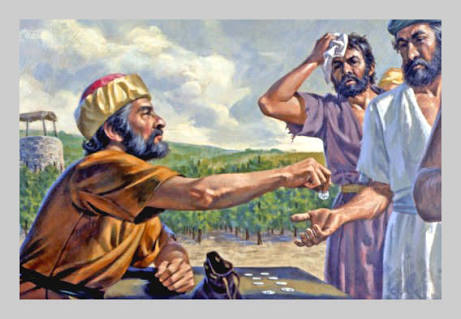
    The grumbling verse reminded me of one of my favorite grace parables. A vineyard owner hired some workers early in the morning to help bring in the harvest. Jesus continues the story.

    “At five o’clock that afternoon he was in town again and saw some more people standing around. He asked them, ‘Why haven’t you been working today?’ “They replied, ‘Because no one hired us.’ “The landowner told them, ‘Then go out and join the others in my vineyard. (Matthew 20:6-7)

    So far the story is nice. A kind and compassionate man wants to help some poor folks who had no work. They could work an hour and at least get a tiny bit for their effort. But Jesus is about to turn the “fairness” doctrine over like a table in the Temple.

    “That evening he told the foreman to call the workers in and pay them, beginning with the last workers first. When those hired at five o’clock were paid, each received a full day’s wage. When those hired first came to get their pay, they assumed they would receive more. But they, too, were paid a day’s wage. When they received their pay, they protested to the owner, ‘Those people worked only one hour, and yet you’ve paid them just as much as you paid us who worked all day in the scorching heat.’

    “He answered one of them, ‘Friend, I haven’t been unfair! Didn’t you agree to work all day for the usual wage? Take your money and go. I wanted to pay this last worker the same as you. Is it against the law for me to do what I want with my money? Should you be jealous because I am kind to others?’

    “So those who are last now will be first then, and those who are first will be last.” (Matthew 20:8-16, NLT)

    Can’t you just see it? The grumbling of the sweaty and exhausted all day workers decrying that they had been treated unfairly yet the truth is they got exactly the wage they agreed upon. I wondered about the reaction of the latecomers. Did they gloat about their luck? I don’t think so. I imagine they wept at the kindness of an unmerited gift given by a unexpectedly kind man. At 4 pm they faced the prospect of going home with nothing to provide for their family but two hours later they had been given, not earned, a full days wage! Think of the joy as the men went home and excitedly told about this amazing generosity. The family likely gathered around and touched the denarius like a sacred gift from Heaven. What a contrast of joy from a once forgotten group of men juxtaposed against the grumbling of the people who had done the “right” thing and expected to be treated better. What a picture of grace! We don’t earn grace by a full day or one hour effort. Grace is a gift. Grace is an unearned gift of love to be savored, appreciated, and treasured.  Brennan Manning wrote about the incomprehensibility of grace to the American mindset.

    My life is a witness to vulgar grace — a grace that amazes as it offends. A grace that pays the eager beaver who works all day long the same wage as the grinning drunk who shows up at ten till five. A grace that hikes up the robe and runs breakneck toward the prodigal reeking of sin and wraps him up and decides to throw a party, no ifs, ands, or buts. A grace that raises bloodshot eyes to a dying thief’s request — “Please, remember me” — and assures him, “You bet!”…This vulgar grace is indiscriminate compassion. It works without asking anything of us. It’s not cheap. It’s free, and as such will always be a banana peel for the orthodox foot and a fairy tale for the grown-up sensibility. Grace is sufficient even though we huff and puff with all our might to try and find something or someone that it cannot cover. Grace is enough…

    Indeed.

    My old nature screams that people who make bad decisions over and over get what they “deserve.” They don’t “deserve” to be pursued and loved and restored. They made their bed—now let them lie in it. But there is a small quiet voice in my heart that tells me that they have value. That they are loved by their Creator. And that voice asks who am I to decide who “deserves” anything? Did I “deserve” this amazing gift? The honest answer is no way. Remembering that amazing grace bestowed makes it way easier to love and treat kindly that person who disagrees with you.

    Would you open the outrageous gift of grace and accept it as a mind blowing outpouring of love from a Father who delights in you? Grace doesn’t make sense. Grace is outrageous. And the amazing thing I find over and over is this simple truth. Grace changes hearts. It is the word the church in America needs to model more than ever. We are given inexhaustible grace. We have more than enough to share.

  • Lessons from Covid Class

    Lessons from Covid Class

    Life is full of wonderful moments and blessings. Life also has it’s share of dark valleys and scary storms. None of us gets out of this life unscathed. In the valleys of my life I have taught myself to step back and ask this question. What can God teach me in this trial about Him or about myself?

    This seemingly never ending Covid pandemic has been rife with lessons.

    Lesson #1

    Control freaks have learned a really hard truth from Covid-19. It doesn’t matter one whit how much money, power, or prestige you had accumulated by March of 2020 because Covid rudely stole your ability to control your life. It is funny to search the term “control freak” on the internet and find that so many people try to paint being a controlling person as a positive. I have worked with control freaks and I can tell you the experience for those around them is not pleasant. It is a suffocating and deflating leadership style.

    Quotes about Control freaks (69 quotes)

    This is a particularly distressing trait for followers of Jesus. I think this unpredictable virus exposed a lot of us. We said we trusted God. We wore t-shirts that boldly proclaimed Faith over Fear. But having our health, financial security, and fellowship with others threatened rocked our faith to the core. The only honest reaction is no matter how hard we try to control things we simply cannot. Only God is in control and our attempts to think otherwise is fool’s gold. Author Wayne Dyer said this about the folly of control.

    “It makes no sense to worry about things you have no control over because there’s nothing you can do about them, and why worry about things you do control? The activity of worrying keeps you immobilized.”

    I have seen that truth played out over and over during this season. People of faith are immobilized by fear and worry. I am not diminishing one iota the reality or seriousness of this virus. I am saying that the One in ultimate control will get me through this crisis just like He has been at my side through every other one. Jesus promised He would be steadfast and present in every moment. Covid has not changed that truth.

    “My sheep recognize my voice. I know them, and they follow me. I give them real and eternal life. They are protected from the Destroyer for good. No one can steal them from out of my hand. The Father who put them under my care is so much greater than the Destroyer and Thief. No one could ever get them away from him. I and the Father are one heart and mind.” (John 10:27-30, The Message)

    I am not in control. Never have been. Never will be. It is nice to know that the one thing I can control is my eternal destiny in Christ.

    Lesson # 2

    We really, really, really need one another. Virtual replaced actual contact and at first that seemed okay. The dictionary definition of virtual is revealing.

    adjective: virtual

    1. almost or nearly as described, but not completely or according to strict definition.

    The key word in that description is ALMOST. Virtual is not the same as real contact. The Zoom meetings and Skype calls only vaguely resemble actual interaction and I was surprised at how quickly that substitute failed to satisfy my need for fellowship.

    God designed us for human relationships when He proclaimed it is not good for us to be alone. Adam didn’t come up with that idea. It was the creator who knew how His creation was wired.

    Henri Nouwen brilliantly summarized the need for community.

    “Christian community is the place where we keep the flame of hope alive among us and take it seriously so that it can grow and become stronger in us.”

    Covid extinguished that flame. We lost that comforting touch or reassuring facial expression that helped fan the flame of hope. Losing community was a bigger deal than most of us imagined. Peter wrote about suffering and even the prospect of the final days. I find it interesting that Peter made this the most important task in those dire circumstances.

    “Most important of all, continue to show deep love for each other, for love covers a multitude of sins.” (1 Peter 4:8, NLT)

    We can do that. We can’t control our circumstances. But we can express love through phone calls, messages, and safely distanced encounters. Knowing that you are loved and missed helps a lot. Whenever a person comes to mind send a text or drop a note. You never know how much that brief time detour might mean to someone.

    Lesson #3

    We need to be patient with all of the different responses our fellow sojourners have to this pandemic. This is the hard one for me. There are some really judgmental and harsh indictments of people who view how we should address this virus differently. I really believe that most of us are trying to do the right thing in a very confusing sea of conflicting information. So I default to Paul’s words to the church at Colossae when I feel frustration with some folks responses.

    Make allowance for each other’s faults, and forgive anyone who offends you. Remember, the Lord forgave you, so you must forgive others. Above all, clothe yourselves with love, which binds us all together in perfect harmony. And let the peace that comes from Christ rule in your hearts. For as members of one body you are called to live in peace. And always be thankful. Let the message about Christ, in all its richness, fill your lives. Teach and counsel each other with all the wisdom he gives. Sing psalms and hymns and spiritual songs to God with thankful hearts. And whatever you do or say, do it as a representative of the Lord Jesus, giving thanks through him to God the Father. (Colossians 3:13-17, NLT)

    If I marinate in that passage it seems that my judgment and frustration melt away allowing grace to bubble up. Those are my lessons from Covid. What have you learned?


  • Don’t Let Covid Cause a Fruit Shortage!

    Don’t Let Covid Cause a Fruit Shortage!

    I have some mileage on the life odometer and I can honestly say I have never experienced a season like the one we are currently in. The late sixties were pretty wheels off but even that turbulent time didn’t match this. Instead of uniting as Americans over a pandemic we have divided. Isolation and fear have caused a collective national depression.

    Christians have too often been a part of the problem. In theory we have a message of hope in Christ. We should be a light of courage because we know and trust a loving God. Instead we too often get sidetracked by arguments over wearing masks and whether we should be meeting without restriction. The sound you hear is Satan chuckling that we are missing a chance to show grace, hope, love, and courage.

    How can we make that kind of difference? Paul has an annoying suggestion that if walk in relationship with Jesus you should display the traits he called the fruit of the spirit.

    But the Holy Spirit produces this kind of fruit in our lives: love, joy, peace, patience, kindness, goodness, faithfulness, gentleness, and self-control. There is no law against these things! Those who belong to Christ Jesus have nailed the passions and desires of their sinful nature to his cross and crucified them there. Since we are living by the Spirit, let us follow the Spirit’s leading in every part of our lives. Let us not become conceited, or provoke one another, or be jealous of one another.  (Galatians 5, NLT)

    This is not a shopping list where I can pick one or two and feel pretty good about my godliness. The desire is to display all of the fruit and not just one or two.

    Love, joy, peace, patience, kindness, goodness, faithfulness, gentleness, and self-control.

    Imagine how our witness would explode if we lived out of that list. What would our conversations look like at work if we went fruit shopping in expectant prayer each day? How would our social media posts read? What would these traits mean in our family relationships? How would others view your faith if these qualities were your selling points?

    I am not peddling guilt here. Living this way is impossible by simple grit and begrudging compliance. It is possible only through understanding God’s grace and kindness toward His children.

    Slowly I am beginning to comprehend grace and who I am in Christ. Here is a valuable insight from the book The Search For Significance by Robert S. McGee.

    Our true value is based not on our behavior or the approval of others but on what God’s word says is true. Our behavior is often a reflection of our beliefs about who we are. It is usually consistent with what we think to be true about ourselves (Prov 23:7). If we base our worth solidly on the truths of God’s word, then our behavior will often reflect His love, grace, and power. But if we base our worth on our abilities or the fickle approval of others, then our behavior will reflect the insecurity, fear, and anger that comes from such instability.”

    When I trust who God says I am I begin to stock the fruit of the Spirit in my heart. God declares all of the following list to be true about me…a broken down former TV director. And all of these things became true from the MOMENT I trusted Christ. I didn’t earn any of these through my efforts.

    I am forgiven. Col 2:13–14
    I am a child of God. John 1:2; Rom 8:15
    I received Christ’s KIND of life, eternal: John 5:24
    I was delivered from Satan’s domain and into the Kingdom of Christ: Col 1:13
    Christ came to dwell with me. Col 1:27; Rev 3:20
    I am a new Creation: 2 Cor 5:17
    I am declared righteous by God: 2 Cor 5:21
    I entered a love relationship w/ God: 1 John 4:9-11
    I am accepted by God: Col 1:19-22  

    When I meditate on those truths my heart overflows with gratitude. I am reminded how much I have been forgiven, I marvel at how patient Jesus has been with my excruciatingly slow growth. I stand in amazement that God chose to adopt me as His child. I remember that the negative things that Satan reminds me of everyday no longer define me. I am righteous in the eyes of a Holy God because of the finished work of Jesus on the Cross.

    Consistently demonstrating the fruit of the Spirit is not easy. But I have found it is whole lot easier when you remember the truths above. Don’t let Covid spoil your fruit. We have a hope that others need and displaying the fruit of the Spirit makes the message attractive and real.

  • A Football Coach Showed Me How to Leave a Legacy

    A Football Coach Showed Me How to Leave a Legacy

    At some point in our journey most people start thinking about leaving a legacy. For some the idea of leaving a legacy means accumulating wealth or property to give to the next generation. A family business can be a legacy that keeps a memory alive through the years. Prestige and power can be thought of as a legacy.

    In the winter of 2017 I became friends with Newton Texas high school football Coach W.T. Johnston. His story of courage and faith became the basis of my book “Between the White Lines“. For eighteen months the Johnston family embedded me in their lives and shared their story with unvarnished honesty. I had no idea how much that project and that relationship would influence me.

    I had thought now and then about my legacy. I had always factored my accomplishments into legacy. I had a long and satisfying television directing career. I was fortunate to win a few awards. But the fact is that the moment I stood up to leave that directing chair another person was ready to sit down. The telecasts went on just fine without me. W.T. taught me that leaving a legacy was not about accomplishment. Perhaps the most emotional moment of my career happened after Johnston won an improbable second consecutive state title several months after doctors told him he would be dead. His interview on Fox Sports has been seen by millions and it helped shape how I plan to live the rest of my life. Here is a bit of that remarkable sideline moment.

    “We got together in August right before we started practicing and I told them I probably wouldn’t make it through the season. I was only given eight months to live in January. And I wanted them to be aware of what was going on. And then we got going and there was about two or three weeks during the season I didn’t think I was going to make it. And we talked about that.

    “I always told them this was the last lesson I was gonna teach them. I’ve been around these guys and their dads and their mothers since 1991. And I told them the last lesson I would ever teach them is how to live before you die, and where you put your strength and where you put your belief. The Lord has done so much for me. It’s unbelievable what Jesus has let me do and see through these kids. And I tell everybody—they don’t understand this—I’ve been given a great gift. I’ve been able to see how my life could affect people before I die. These guys, they’ve touched my life. It’s been a mutual thing. But I’ve been able to teach them a lesson that you don’t get to see most times.

    “Last night they were talking about wanting to win for me. I’ve had my time. This is their time. This is all for them. I told them to do it for their teammates, to do it for themselves. Because fifty years from now, this will be something special they’ll always remember.  I mean, they’ll remember me—if I’ve done right, a part of me is going to live in them and that’s what I’ve always thought—if I’ve done things right.”

    What a succinct and brilliant definition of leaving a legacy. If I’ve done things right a part of me is going to live in them.

    Leaving a legacy is not getting to the top of your profession. It is not being the most successful or the most wealthy. Billy Graham had a pretty good resume. It is estimated he spoke to over 200 million people in live audiences over sixty years. He wrote over thirty books. His television and radio programming reached millions more with the Gospel of Jesus. I would say that is a pretty powerful legacy. But here is how Graham defined the word.

    The greatest legacy one can pass on to one’s children and grandchildren is not money or other material things accumulated in one’s life, but rather a legacy of character and faith.

    That is the legacy I hope to leave. Leaving a legacy is being kind to people who can do nothing for you. Leaving a legacy is being fair to everyone and not just the powerful and privileged. Leaving a legacy is making each person you engage feel important and valued. Leaving a legacy is serving selflessly with no expectation for reward. Leaving a legacy is loving your wife, children, friends, and neighbors with forgiveness, patience, humility, and grace. Leaving a legacy is modeling what it looks like to walk with Jesus faithfully through both triumph and tragedy.

    Peter talked about how to live in dark times.

    Most important of all, continue to show deep love for each other, for love covers a multitude of sins. Cheerfully share your home with those who need a meal or a place to stay. God has given each of you a gift from his great variety of spiritual gifts. Use them well to serve one another.

    (1 Peter 4:8-10, NLT)

    Another coach I admire, Tony Dungy, said this about legacy and significance.

    God’s definition of success is really one of significance-the significant difference our lives can make in the lives of others. The significance doesn’t show up in won-loss records, long resumes, or the trophies gathering dust on our mantels. It’s found in the hearts and lives of those we’ve come across who are in some way better because of the way we lived.

    Paul offered a good starting point for this legacy project in his letter to the Church at Philipi.

    Fix your thoughts on what is true, and honorable, and right, and pure, and lovely, and admirable. Think about things that are excellent and worthy of praise. (Philippians 4:8, NLT)

    If you live like that you will find that my friend W.T. Johnston is one-hundred percent correct when he said a piece of you will live in others forever.

    Missing football? Between the White Lines is an inspiring story of a great coach and how faith challenged and changed a town and team.

  • “Trash Talking” in Community.

    “Trash Talking” in Community.

    Last week we moved out of the house that our family had called home for thirty years. We experienced a lot of love, laughter, and memories in that house. There was also a lot stuff. Tons and tons of stuff. My amazing wife Joni organized a multi-week campaign leading up to the move to decide what needed to be sold, donated, re-homed, or trashed. It was a daunting task.

    Last Wednesday marked the final day of Operation Downsize as we finished cleanup at the old house and moved a few things to temporary housing. Several people from our church small group came to help us finish up. At our home church, Waterbrook Bible Fellowship, we call these groups “Home Teams”. We wrapped up some final packing and loaded a few fragile items into friend’s vehicles to be transported.

    But one embarrassing problem remained. The trash overflowed the capacity of our trash container. The solution was surprising. Several of our friends volunteered to take a bag of trash home with them to dispose of.

    Later Joni commented about the day. “Our Home Team is amazing. They even took our trash.”

    My first thought was this was a very practical metaphor for what community should be. We all wish that we had people who would be willing to take on the “trash” in our lives willingly and without judgment. My friend John Lynch has a saying I have quoted so much I should pay him residuals.

    ““What if there was a place so safe that the worst of me could be known, and I would discover that I would not be loved less, but more In the telling of it?”

    Or to use our moving metaphor “what if there were a few people who knew I had more trash in my life than I could handle, but they were not disgusted or repelled but moved to take on that trash and help me get rid of it.”

    That is a room of grace where there is no condemnation. Joni and I have been a part of three different small groups that were transformational. They all had the following characteristics.

    1. Leave your politics on the porch. Most of us have strong convictions about political issues but these gatherings are about Jesus and how He relates to our journey together. Jesus spent zero time on politics except to tell the Pharisees to give Caesar his tax money.
    2. Make your gathering a safe place. Nothing shuts down trust more that sharing private things without permission. We make a rule that nothing is shared outside of our meeting without permission. That includes the sneaky Christian way of gossiping by sharing “prayer requests” out of “concern” for others. Get permission. Building that trust will help amazing things to happen.
    3. Learn each other’s stories. We make it a point to find out the life and spiritual journey each member of our group has taken. Hearing what a person has gone through in life will often change your heart attitude from judgment to deep admiration for their courage and resilience.

    God knows that we need others to make it through this often difficult journey. Scripture is full of exhortations about caring for and loving one another. Here are a couple of my favorites.

    Let us think of ways to motivate one another to acts of love and good works. And let us not neglect our meeting together, as some people do, but encourage one another, especially now that the day of his return is drawing near. Hebrews 10:24-25, NLT

    Make allowance for each other’s faults, and forgive anyone who offends you. Remember, the Lord forgave you, so you must forgive others. Above all, clothe yourselves with love, which binds us all together in perfect harmony. And let the peace that comes from Christ rule in your hearts. For as members of one body you are called to live in peace. And always be thankful. Colossians 3:13-15, NLT

    This passage in 1st John summarizes the why for living in community and loving others. We do it because Jesus first loved, served, and sacrificed for us.

    God showed how much he loved us by sending his one and only Son into the world so that we might have eternal life through him. This is real love—not that we loved God, but that he loved us and sent his Son as a sacrifice to take away our sins.

    Dear friends, since God loved us that much, we surely ought to love each other. No one has ever seen God. But if we love each other, God lives in us, and his love is brought to full expression in us. 1 John 4:9-11, NLT

    All of us have excess trash in our lives. A lot of us are not quiet sure what to do with it. If we trust Jesus and others to help us with that trash you will find joy and liberty that you cannot imagine.

  • Time for a Family Conference!

    Time for a Family Conference!

    While our three sons were living under our roof there were five words that struck fear in their hearts.

    “Time for a family conference”.

    They knew that I was about to have a conversation with them and I was going to do most of the talking. I suspect they felt I was being punitive when I called for a conference. The truth is I was pursuing protective love and not punishment. Protective love sees a family dynamic that is hurting someone in the family and when one in the family is hurting all of us are hurting.

    When I see the current dynamics of my Christian family I wish I could call a family conference with a heart of protective love. I see social media posts from friends who identify with Jesus that are downright mean and ungraceful. Some repost things that are supposed to be funny but are disrespectful. Others repost sensational stories without verifying them. All of those actions dim the light of our witness.

    I totally understand that there are cultural trends that dismay followers of Jesus. I support standing up for the truth. But I am convicted more than ever that the only way to have an impact is to communicate that truth in love.

    I already know the push back from some readers. They remind me that Jesus got angry and even destructive when he overturned the tables in the Temple. Fair point. So I have compiled a brief survey to complete. Please check each statement that is true about you.

    _____ I have never sinned.

    _____ I know with 100 per cent accuracy the heart and motives of those I disagree with.

    If you can check both of those statements then I will happily grant you the “Jesus Exemption”. For the rest of us I would suggest that we concentrate more on following the words of Jesus.

    “Do to others as you would like them to do to you. If you love only those who love you, why should you get credit for that?” Luke 6:31

    Or maybe we should follow the example of Paul. He found himself in Athens surrounded by people that had to upset him. His strategy was brilliant and instructive for social media today. I wrote about it in When Bad Christians Happen to Good People.

    What if we decided to be a kinder and gentler culture warrior, fearlessly and boldly confronting the culture with a great and incomprehensible love? I can tell you in advance that the results would be mixed. Acts 17 documents the apostle Paul’s visit to the city of Athens, a city that caused him great distress (the Greek word, roughly translated, means “ticked off”) because the city was full of idols. Yet, instead of arguing with or maligning the Jews and God-fearing Greeks, he reasoned with them and others who came to listen. Paul was introducing them to some strange ideas, and they wanted to know more. Verse 21 notes that residents of Athens spent their time doing nothing but talking about and listening to the latest ideas. Their pastime could be considered an ancient version of our talk-radio format. I love what happens next. Paul met his audience where they were. He stood up and said, “Men of Athens! I see that in every way you are very religious. For as I walked around and looked carefully at your objects of worship [notice no condemnation of the idols that Paul obviously found distasteful], I even found an altar with this inscription: to an unknown god. Now what you worship as something unknown I am going to proclaim to you” (verses 22-23).

    Brilliant! In broadcasting this is known as packaging your idea. You set up a common interest and then tease the audience with the coming payoff to keep them tuned in. But what if Paul and the early believers had approached Athens with some of the strategies we use today? Several believers would march throughout the marketplace defiantly holding up placards:

    “If you think you are stoic now, wait till the Lord returns!”

    “Hey, Epicureans…the party’s over!”

    What if Paul had stepped up and announced, “Repent, you pagan, godless sons of the devil, before you burn in a fiery hell. Take your idols and put them where the goddess of sunlight doesn’t shine.”

    I don’t think Paul would have had much of an audience, let alone success. When he finished speaking to the crowd in Athens, the Bible records the box score. It’s pretty much what you and I can expect when we sincerely and lovingly explain our faith. Some of them sneered. Some of them said, “We want to hear you again on this subject.” And a few “believed.” Paul endured all that he did for those who believed and those who wanted to hear more. He could not have enjoyed the sneers. While that response is not unexpected, it is never fun.

    The early church had no chance to “win” the culture war. Instead they built a community of believers that infiltrated the culture.

    Winning hearts almost always works by communicating the truth with grace and love. Truth communicated as law will harden hearts. Truth communicated with grace and love has a chance to soften and change them. To wit, I have never seen one single example of a person persuaded by a Facebook rant. I have seen hundreds hardened in their beliefs (right or wrong) by those tactics.

    Change happens when the God’s love breaks through the hurt and confusion of the past and shows the future hope of grace and forgiveness. I will buy you coffee if you can show when a change of heart happened by being harangued and called names. Change happens when the gentle and quiet voice of the Spirit touches a wounded heart. So my plea to my fellow followers of Jesus is to realize you represent Him when you proclaim your truths in the name of Jesus. If you can’t be graceful you might prayerfully consider removing the Jesus tags from your bio. I don’t say that to be mean. I am simply saying if you are representing Jesus you have this standard to follow.

    God blesses those who work for peace,
        for they will be called the children of God. Matthew 5:9

    And I might call in Paul for backup at my family conference.

    Don’t use foul or abusive language. Let everything you say be good and helpful, so that your words will be an encouragement to those who hear them. Ephesians 4:29

    Let your conversation be gracious and attractive so that you will have the right response for everyone. Colossians 4:6

    I know how easy it is to get riled up with internet threads. Remember who you represent and respond accordingly. Jesus makes it clear.

    A good person produces good things from the treasury of a good heart, and an evil person produces evil things from the treasury of an evil heart. What you say flows from what is in your heart. Luke 6:45

    All followers of Jesus need to prayerfully examine our hearts before we hit send.