Tag: politics

  • What Jesus Would Say About Politics in the Pulpit?

    I used to be a rabid political guy. I once believed we could change the culture with the correct political leaders. I was right to dream about changing our culture but I was wrong about the best method. Even if I could get my “dream team” elected we would still have a problem in our world.

    Sin.

    Politics and legislation don’t change the inconvenient truth that we have an inherent human heart problem. Jesus gave us a perfect example of what it looks like to be a good citizen while recognizing what really changes the heart of man. The religious legalists (the Pharisees) were trying to trick Jesus to get Him in trouble with the Roman government. Nice try.

    “Teacher,” they said, “we know how honest you are. You are impartial and don’t play favorites. You teach the way of God truthfully. Now tell us—is it right to pay taxes to Caesar or not? Should we pay them, or shouldn’t we?”

    Jesus saw through their hypocrisy and said, “Why are you trying to trap me? Show me a Roman coin, and I’ll tell you.”When they handed it to him, he asked, “Whose picture and title are stamped on it?”

    “Caesar’s,” they replied.

    “Well, then,” Jesus said, “give to Caesar what belongs to Caesar, and give to God what belongs to God.”

    His reply completely amazed them. (Mark 12:13-17, NLT)

    Tim Keller brilliantly identifies what happens when we make politics an ultimate thing.

    “If you center your life and identity on a “noble cause,” you will divide the world into “good” and “bad” and demonize your opponents. Ironically, you will be controlled by your enemies. Without them, you have no purpose.”

    So many people have taken demonizing to an art form in this current climate and both sides of the aisle believe they have the noble cause. We have seen the devastation to our country when we demonize our opponents. We must not fall into that trap as representatives of Jesus. Love those who oppose you and show them that grace is a bipartisan gift from God. Let me say that I take my responsibility as a citizen very seriously. I do my homework and I vote in every election. That is a privilege I treasure.

    Paul wrote to a church in Rome that certainly had to deal with some political issues.

    Everyone must submit to governing authorities. For all authority comes from God, and those in positions of authority have been placed there by God.  (Romans 13:1, NLT)

    That can be a hard one for believers right, left, and center to stomach at times. But I didn’t write those words in Scripture that remind me that God is in control and I am not.

    Author Philip Yancey offered this insight.

    “Jesus and Paul spent no energy on trying to clean up the Roman empire, despite their terrible practices of abandoning infants, pederasty, and gladiator games.  Indeed, the people Jesus denounced most harshly, the Pharisees, were some of the most moral people on earth.  He did not give us the challenge of imposing our morality on others, but rather of spreading a far more radical message: that God loves sinners.  Politics is based on power, and power always causes divisions.  It is very difficulty indeed to get across a message of love and power at the same time.  One of them always loses out, and we are called to emphasize love.”

    I agree. Jesus spent zero time trying to change the political culture. He spent all of His time changing hearts. The real power to change our broken world comes from the finished work of Jesus and the transformational power of the Gospel. No matter what happens on Election Day I will believe that God is sovereign and His plan will be accomplished. My passion will be to share the hope that Jesus offers to both sides of the aisle and that hope is eternal. I now believe with all of my heart that the Gospel of forgiveness and grace is the ultimate cultural game changer.
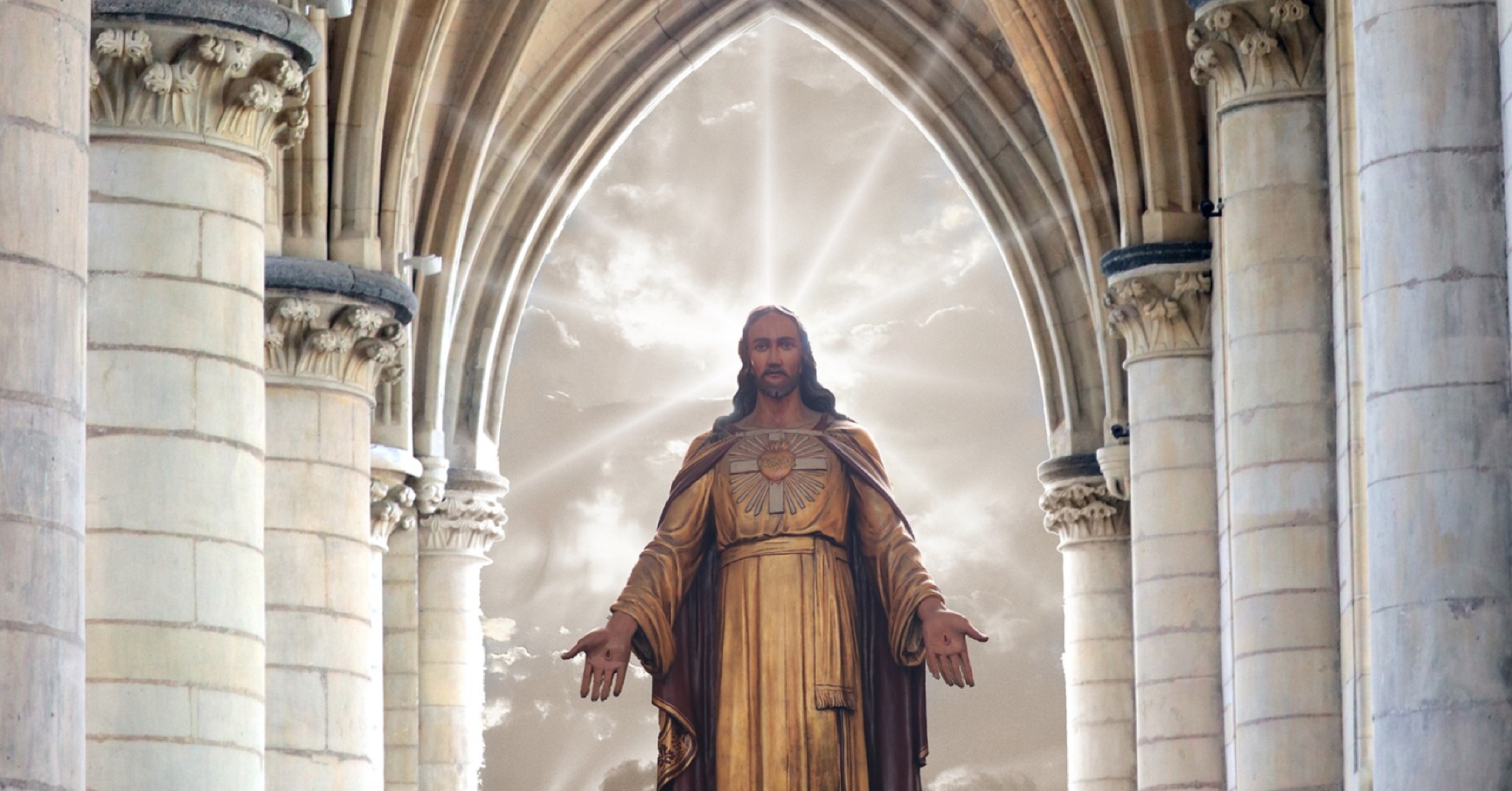
  • Jesus and Politics

    Jesus and Politics

    Nothing like starting out the week by discussing two of the three forbidden topics: politics and Jesus. I used to be a rabid political guy. I once believed we could change the culture with the right political leaders. I was right to have the dream but wrong about the method. Even if I could get my “dream team” elected we would still have a problem in our culture.

    Sin.

    Politics and law don’t change the inconvenient truth that we have an inherent human heart problem. Jesus gave us a perfect example of what it looks like to be a good citizen while recognizing what really changes the heart of man. The religious legalists (the Pharisees) were trying to trick Jesus to get Him in trouble with the Roman government. Nice try.

    “Teacher,” they said, “we know how honest you are. You are impartial and don’t play favorites. You teach the way of God truthfully. Now tell us—is it right to pay taxes to Caesar or not? Should we pay them, or shouldn’t we?”

    Jesus saw through their hypocrisy and said, “Why are you trying to trap me? Show me a Roman coin, and I’ll tell you.”When they handed it to him, he asked, “Whose picture and title are stamped on it?”

    “Caesar’s,” they replied.

    “Well, then,” Jesus said, “give to Caesar what belongs to Caesar, and give to God what belongs to God.”

    His reply completely amazed them.

    Tim Keller brilliantly identifies what happens when we make politics an ultimate thing.

    If you center your life and identity on a “noble cause,” you will divide the world into “good” and “bad” and demonize your opponents. Ironically, you will be controlled by your enemies. Without them, you have no purpose.

    We have taken demonizing to an art form in this current climate and both sides of the aisle believe they have a noble cause. We have seen the devastation to our country when we demonize our opponents. We must not fall into that trap as representatives of Jesus. Love those who oppose you and show them that grace is a bipartisan gift from God. Let me say that I take my responsibility as a citizen very seriously. I do my homework and I vote in every election. That is a privilege I treasure. Who is in power has been an issue throughout history.

    Paul wrote to a church in Rome that certainly had to deal with some political issues.

    Everyone must submit to governing authorities. For all authority comes from God, and those in positions of authority have been placed there by God.  (Romans 13:1, NLT)

    That can be a hard one for believers right, left, and center to stomach at times. But I didn’t write those words in Scripture that remind me that God is in control and I am not.

    Philip Yancey wrote these words.

    Jesus and Paul spent no energy on trying to clean up the Roman empire, despite their terrible practices of abandoning infants, pederasty, and gladiator games.  Indeed, the people Jesus denounced most harshly, the Pharisees, were some of the most moral people on earth.  He did not give us the challenge of imposing our morality on others, but rather of spreading a far more radical message: that God loves sinners.  Politics is based on power, and power always causes divisions.  It is very difficulty indeed to get across a message of love and power at the same time.  One of them always loses out, and we are called to emphasize love.

    I agree. Jesus spent zero time trying to change the political culture. He spent all of His time changing hearts. The real power to change our broken world comes from the finished work of Jesus and the transformational power of the Gospel.

    My book, Waking Up Slowly, can be used as a 21 Day Journey to become more connected with God, one another and yourself.

    Waking Up Slowly_Cover

  • Revisiting Grace Rules of Engagement

    Revisiting Grace Rules of Engagement

    I made a conscious decision a few years ago to focus on communicating the message of grace and identity in Christ. With that I decided to avoid the polarizing path of politics. Some have told me that is cowardly but I can honestly say there is no message more important to me than the liberating freedom of grace. I want to share the joy of living out of what Jesus has already accomplished and what God says is true about me.

    That I am a saint. A new creation. A beloved child of God. I relate to the mission statement of Paul when he wrote these words.

    But my life is worth nothing to me unless I use it for finishing the work assigned me by the Lord Jesus—the work of telling others the Good News about the wonderful grace of God. (Acts 20:24, NLT)

    I feel called to be a messenger of hope and grace. Plus I feel like the negative team has a pretty full roster of contributors. 

    I still believe that is my calling with these humble ramblings. But how does grace enter into the conversation when we have sincere disagreements over cultural and political issues?

    It is fascinating how two people can look at the same information and reach completely opposite conclusions. So I am going to offer the “Grace Rules of Engagement” as a roadmap for civil discussion. 

    • Sincere followers of Jesus can look at cultural or political issues and have very different opinions. Jesus loves His children on both sides of the argument.

    I know I have changed my views on some cultural issues over my years of walking with Jesus. I was a child in the era when divorce was a mortal sin. I absolutely am committed to the idea of a husband and wife taking their vows seriously. But I learned that the cultural shame of divorce caused many Christian women to feel trapped in relationships of abuse. Clearly that was not the desire of a loving Heavenly Father who ordained marriage. In those sad situations it is necessary to divorce an abusive spouse. In the pulpits of my youth the message was no divorce outside of adultery was ever justified. I had a blind spot about how a declaration that appeared Biblical could foster abuse. So many issues we discuss have similar and complex nuances. We need to discuss, not demonize.

    • The goal of a discussion should not be to win.

    Thoughtful discourse is impossible when one of the participants only cares about winning the debate. The goal of any conversation should be graceful exchange of ideas without rude interruptions, condescending gestures, or angry exchanges. I would rather have a goal of being winsome instead of winning. That attitude fosters conversation. 

    • People of different viewpoints should commit to listen. Nothing shows respect more than carefully listening to the arguments of those with whom you disagree and then gently offering thoughtful responses. 

    Listen to talking heads on television news shows as they “discuss” different points of view. As soon as one side starts talking the other shakes their head, smirks, and then interrupts and talks over the other person. How is that going to persuade anyone? Yet we tend to do the same thing when we have significant disagreements with people of faith. Listen. Really listen. Let them finish their point. Then respond in grace.

    • Ask questions.

    You will not influence another person by arguing. The way to connect is to ask questions and try to understand why they feel the way they do. I have found that many times people I talk with don’t have a solid reason for their feelings. That can be a opening to honestly discuss difficult topics. 

    • Climb out of your bubble

    Find out what the other person is reading and watching. Expose yourself to different points of view and encourage those you have disagreements with to do the same. If you are confident in your beliefs there should be no fear in being exposed to differing viewpoints.

    • All of us are a work in process.

    Every child of God is in process. I am a very different Christian than I was 20, 10, or even 5 years ago. I am growing (hopefully) in grace and truth. I strongly believed and said things years ago that I am grieved about today. Thankfully God was patiently working with my heart and gently shining the light of the Holy Spirit on my blind spots. I need to give that grace to others. 

    • Pray for wisdom and grace then leave the results to God.

    So what is the goal when you have sincere disagreements with another believer over cultural issues? Use the “Grace Guidelines” and relax. God may be using you to plant seeds in the heart of the other person. Maybe you have a blind spot that needs the refining work of the Holy Spirit. Share your heart with love and kindness and be open to the possibility that you may be the one who needs to change your heart.

    • Grace never cancels

    Grace does not “cancel”. Grace does not shame. Grace does not answer anger with anger. The person you totally disagree with may be crying out of pain and deep wounding. Perhaps a gentle answer will give hope. Grace does not lash out when challenged. Grace is kind and gentle.

    Being graceful can be a pain in the hind regions but it is what we are called to offer to others. Paul addresses this to the church at Colossae. 

    Since God chose you to be the holy people he loves, you must clothe yourselves with tenderhearted mercy, kindness, humility, gentleness, and patience. Make allowance for each other’s faults, and forgive anyone who offends you. Remember, the Lord forgave you, so you must forgive others. Above all, clothe yourselves with love, which binds us all together in perfect harmony. And let the peace that comes from Christ rule in your hearts. For as members of one body you are called to live in peace. And always be thankful.

    Let the message about Christ, in all its richness, fill your lives. Teach and counsel each other with all the wisdom he gives. Sing psalms and hymns and spiritual songs to God with thankful hearts. And whatever you do or say, do it as a representative of the Lord Jesus, giving thanks through him to God the Father.

    Colossians 3:12-17, NLT

    Perhaps the most important thing all of us can do to further the unity in the body of Christ is to memorize that passage and try to implement those words for 30 days. By the grace of God it could become a habit.

    Be kind to those who disagree and remember the words of author Alexander MacLaren. “Kindness makes a person attractive. If you would win the world, melt it, do not hammer it.”

  • My Biggest Mistake?

    My Biggest Mistake?

    Years ago I wrote a book with the provocative title of “When Bad Christians Happen to Good People”. In that book I was incredibly candid about the damage that Christians often do in the name of Jesus. I expected to get roasted for my candor about my faith. For the most part that didn’t happen. Perhaps those who most needed to read it didn’t recognize their need to read it. A couple of fans of one heretical televangelist decided I was on the express train to hell. Who knew they could read?

    I took the most heat for a chapter where I cleverly (I thought) tried to use a political situation to make a spiritual point. Bad idea. I mean a bad idea along the lines of tank tops for middle-aged men and Spandex for almost everyone. 

    I learned my lesson. 

    I regret the political references I made in that book. I was able to revise and replace those words in a later version. I learned the hard way how much political remarks polarize and deflect the message of the Cross. I tried to make it clear that Christians were making a mistake by trying to change the culture through politics instead of by changing hearts for Jesus. But my entire message was ignored by some because of a poorly executed illustration.

    I expect to see Democrats and Republicans and Libertarians and Independents in heaven. But the common link will not be political ideology. The common link that will bring us eternally together will be Jesus.

    Jesus chose to work by starting his own grassroots movement of faith and discipleship. He could have chosen to work in the lives of leaders and politicians. He could have chosen to concentrate only on people of power and influence. That is likely what I would have done. Jesus could have encountered Caesar on a Roman road instead of Paul on the Damascus road. But He did not. He chose to work through common men and women. He taught a radical message of grace and humility and service. He valued women, children, the poor, blind, crippled, and ethnic outcasts in a way that was revolutionary and threatening to the status quo. Jesus was an off the charts revolutionary. You generally don’t get crucified for just being annoying. 

    He served instead of demanding to be served. He loved the unlovable and forgave the unforgivable. He taught that to a group of men and women in the first century who, with NO political power at all, turned the world upside down. 

    And that is where we as His followers have fallen short. We have fallen short by making righteousness about behaving the way we think you should behave instead of by modeling the One who makes righteousness possible. If the body of Christ had demonstrated His grace in a lifestyle wrapped around discipleship and serving I suspect we would not be fighting Washington to change the culture. It would be happening in the hearts of men and women and that would be the ultimate trickle-down effect. 

    I am not smart enough to decide what God has called people to do. If He has placed a desire for people to impact the culture through political action I am not about to question their motives. But my hope is in Christ and my trust is in a God who is in control even when I cannot see it.

    So this writer will steer clear of politics in my humble ramblings about faith. God’s Word taught with truth and love will mold followers of Jesus to view social issues wisely. Moralizing on sexual issues has produced guilt but not real results. Jesus forgave the woman caught in sin and THEN said go and sin no more. My goal is to tell people about the grace and love of Jesus, disciple them into a real relationship with Him, and then  watch as the Holy Spirit changes what my sermonizing cannot. Their hearts.

    The body of Christ is about Jesus. About being a good citizen that respects authority. And about demonstrating His amazing grace to a desperately needy world. The message should be grace, redemption, and the forgiveness available to everyone. All political parties are welcome at the foot of the cross. We need to spend more time there…for the good of America. Jesus left us with these words that would be good to remember when you get discouraged by the cacophony of twenty-four hour news.

    Here on earth you will have many trials and sorrows. But take heart, because I have overcome the world. (John 16, NLT)

    I pray that you will believe and trust that truth. And share your hope with joy.

  • Monday Musings – Forbidden Topics

    Monday Musings – Forbidden Topics

    Nothing like starting out the week by discussing two of the three forbidden topics: politics and Jesus. I used to be a rabid political guy. I once believed that with the right political leaders we could change the culture. I was right about the dream but wrong about the method. Getting certain political leaders in place might help with some issues that matter to me. But even if I get my “dream team” elected we will still have a problem in our culture.

    Sin.

    Politics and law don’t change that inconvenient truth (apologies to Al Gore) that we have an inherent human problem that I believe can only be addressed by one solution.

    The Gospel.

    Jesus gave us a perfect example of what it looks like to be a good citizen while recognizing what really changes the heart of man. The religious legalists (the Pharisees) were trying to trick Jesus and get Him in trouble with the Roman government. Nice try.

    “Teacher,” they said, “we know how honest you are. You are impartial and don’t play favorites. You teach the way of God truthfully. Now tell us—is it right to pay taxes to Caesar or not? Should we pay them, or shouldn’t we?”

    Jesus saw through their hypocrisy and said, “Why are you trying to trap me? Show me a Roman coin,[c] and I’ll tell you.” When they handed it to him, he asked, “Whose picture and title are stamped on it?”

    “Caesar’s,” they replied.

    “Well, then,” Jesus said, “give to Caesar what belongs to Caesar, and give to God what belongs to God.”

    His reply completely amazed them.

    So I am no longer rabid political guy. I am a concerned citizen who studies issues and candidates and always votes. I love this country and believe in this country but revival will not come from Washington D.C. It will come from heart changes in every nook and cranny of this land from people who understand their deep need for grace, forgiveness and redemption.

    Christians should certainly understand that lawmakers can only restrain a culture at best. Only “Grace-makers” can change a culture.

    Tim Keller brilliantly identifies what happens when we make politics an ultimate thing.

    If you center your life and identity on a “noble cause,” you will divide the world into “good” and “bad” and demonize your opponents. Ironically, you will be controlled by your enemies. Without them, you have no purpose.

    Both sides of the aisle believe they have a noble cause. And we have seen the devastation to our political system when we demonize our opponents. We must not fall into that trap as representatives of Jesus.

    I will believe what Paul wrote to a church in Rome that certainly had to deal with some political issues

    Everyone must submit to governing authorities. For all authority comes from God, and those in positions of authority have been placed there by God.  (Romans 13:1, NLT)

    That is a hard one for believers on both sides of the aisle to stomach but I didn’t write those words in Scripture.  The real power to change our broken world comes from the finished work of Jesus and the transformational power of the Gospel.