Tag: Kindness

  • Color Shouldn’t Matter ‘Cause We All Bleed the Same

    It was so sad to hear of the passing of the incredibly talented singer Mandisa. I remembered a duet from Mandisa and TobyMac that touched me deeply. They addressed the heartbreaking issue of racism and political division that affects our culture and often impacts the church.

    These lyrics immediately grabbed my heart.

    Are you left?
    Are you right?
    Pointing fingers, taking sides
    When are we gonna realize?

    We all bleed the same
    We’re more beautiful when we come together

    We all bleed the same
    So tell me why, tell me why
    We’re divided.

    Why indeed? I am praying for another leader like Martin Luther King Jr who will remind us that hateful rhetoric never, ever, ever changes a heart. 

    Followers of Christ have a message of hope and light that is desperately needed. But we can get caught up in the politics of our world and snuff out that light. I have been guilty of that in my journey at times.

    I fear our culture will get darker in the days and months ahead. Followers of Christ have to make a decision. We can decide to complain that Christians are no longer respected and valued in the culture. Or we can decide to show the kind of kindness, forgiveness, grace, and love that early Christians demonstrated to change a hostile culture. Christianity really functions best as the underdog. We can ask God to give us the strength and grace to be a light in the darkness.

    What does that mean? What message makes a difference? During a British conference on comparative religions, experts from around the world debated what, if any, belief was unique to the Christian faith. They began eliminating possibilities. Incarnation? Other religions had different versions of gods’ appearing in human form. Resurrection? Again, other religions had accounts of return from death. The debate went on for some time until C. S. Lewis wandered into the room. “What’s the rumpus about?” he asked, and heard in reply that his colleagues were discussing Christianity’s unique contribution among world religions. Lewis responded, “Oh, that’s easy. It’s grace.”

    Perhaps the fact that grace and forgiveness are rare commodities in this society is a big reason we see such anger and hopelessness.

    Our natural reaction to those who denigrate our faith is to strike back. Jesus knew this would happen and He had some very radical instructions.

    “But I say to you who are listening: Love your enemies, do good to those who hate you, bless those who curse you, pray for those who mistreat you. (Luke 6:27-28,  NET)

    I wonder what God could do if we followed those words?  And if we remembered that we all created in the image of God but our different experiences and stories can divide us. They don’t have to.

    If we’re gonna fight
    Let’s fight for each other
    If we’re gonna shout
    Let love be the cry
    We all bleed the same
    So tell me why, tell me why
    We’re divided

    My prayer is that we do not focus on the multitude of political issues that divide us but on the one healing name that can unite us.

    Jesus.

    His blood was shed on the Cross for all races. If we believe that then why are we divided? We don’t need to be if we keep our eyes on the Cross.


  • Science Suggests that Jesus and the Apostle Paul were on to Something


    A recent study published by the Psychology Department at the University of Essex looked at the negative emotional and cognitive effect of hearing bad news only. Here is the opening statement from the study.

    Journalists employing the maxim “if it bleeds, it leads” seem intuitively aware of the negativity bias people have in attending to and remembering bad events over good ones. Indeed, negatively valenced news dominates the press and is shared on Twitter more frequently than positively valenced news

    journals.plos.org

    The study went on to note that “news featuring others’ immorality captivates people, it can have aversive affective and cognitive impacts, increasing emotional disturbances and negatively skewing people’s belief in the goodness of others”.

    I think we have witnessed that increasing and divisive effect on our culture. The authors are correct that such reporting of bad news “captivates” and leads to lots of unhealthy biting on the clickbait of negativity. The study examined an interesting counterbalance. Would showing acts of human kindness and compassion immediately after the acts of immorality create better emotional health?

    The results revealed that seeing those acts of kindness left the test subjects in a better mood and with more positive views of humanity. Just to see if kindness was the difference maker they showed some subjects only humorous stories to offset the bad news. Those subjects felt better but the conclusion was fascinating.

    Quoting the study again.

    Amusing news stories certainly helped buffer the effects of bad news and reduce the mood disturbances they caused. But in comparison, participants who’d been shown acts of kindness reported a more positive mood on average, and a greater belief in the goodness of humanity.

    This shows us there’s something unique about kindness which may buffer the effects of negative news on our mental health.

    niemanlab.org

    I find these studies fascinating as a person who believes in the wisdom of Scripture. The effects of kindness were well documented in the writings of the Gospels, the Epistles of Paul, and many other places in the Bible. It is important to note that these concepts were revolutionary in a culture which focused on power and control. Paul’s message to the church at Colossae is just one example of the amazingly positive potential of following the teachings of Jesus.

    Since God chose you to be the holy people he loves, you must clothe yourselves with tenderhearted mercy, kindness, humility, gentleness, and patience. Make allowance for each other’s faults, and forgive anyone who offends you. Remember, the Lord forgave you, so you must forgive others. Above all, clothe yourselves with love, which binds us all together in perfect harmony. And let the peace that comes from Christ rule in your hearts. For as members of one body you are called to live in peace. And always be thankful. (Colossians 3)

    Scottish writer Henry Drummond observed in the late 19th century that “the greatest thing a man can do for his Heavenly Father is to be kind to some of His other children”. That is our job as followers of Christ. Too often we have failed to show up for work.

    We are the hands, feet and arms of God on this planet. Christian vocal group Casting Crowns asked lyrically that “if we are the body why aren’t His arms reaching and why aren’t His hands healing”? I am afraid the answer is a hard truth. We don’t care enough for the lost. We don’t ache for the hurting. We don’t sacrifice for the poor. Perhaps most disappointing of all is that we don’t practice kindness consistently.

    I want the grace that God has given me to make my heart sensitive toward the poor and hurting and spiritually seeking. It is hard to spend much time in the New Testament and not realize our challenge to be kind. Here is a very small sample.

    35 But love your enemies, and do good, and lend, expecting nothing in return, and your reward will be great, and you will be sons of the Most High, for He is kind to the ungrateful and the evil. (Luke 6:35, ESV)

    22 But the fruit of the Spirit is love, joy, peace, forbearance, kindness, goodness, faithfulness, (Galatians 5:22 ESV)

    32 Be kind to one another, tenderhearted, forgiving one another, as God in Christ forgave you. (Ephesians 4:32 ESV)

    4 Love is patient and kind; love does not envy or boast; it is not arrogant or rude. 1 Corinthians 13:4, ESV)

    The charge of hypocrisy leveled at the church has a lot to do with our obsession with sin management over living a life of kindness, grace and service. If I am not living out of grace then His arms aren’t reaching as far as they could. Kindness is clearly step one.

    Kindness does require great skill or advanced degrees. One of my spiritual heroes is Frederick Buechner. He wrote that “if you want to be holy, be kind”. You do not have to like someone to be kind. Kindness is powerful. Kindness tears down walls. Kindness builds trust. Kindness shows the love of Christ through our imperfect efforts. For Christians, kindness gives the hearer a reason to listen to our message of redemption and grace. I think writer Alexander MacLaren summarized it beautifully. “Kindness makes a person attractive. If you would win the world, melt it, do not hammer it.”

    Scientific research shows kindness makes a difference to offset the evil in this world. Scripture tells us kindness can make a difference. The world is overwhelmed with bad news. Wouldn’t it be a blessing to be a kind vessel of Good News for those we encounter on our journey?

    Excerpt from Waking Up Slowly

  • Can’t “Duck” This Vital Need

    Can’t “Duck” This Vital Need

    I remember sitting with Joni outside a little cabin near Fredericksburg, Texas when a flock of eight ducks noisily left the pond and waddled toward us. They lined up and quacked expectantly. If I spoke duck I suspect the translation would have been something like the famous quote from Caddyshack.

    “Hey, how about a little something, you know, for the effort, you know.”

    We fed the ducks some cereal flakes and apparently that was an acceptable offering. Every time we went out on our porch the ducks would waddle over and wait for their snack. Joni and I were fascinated by their behaviors. They always stayed together. There was a clear leader of the pack and when the leader decided it was time to move on to other activities the seven dutifully followed. They swam at the same time. Groomed at the same time. They slept at the same time. They were created to thrive in community. So are we.

    Here is an excerpt from my book Stay about living in community.

    We were created to be in a community with other believers. Because of our unity in Christ, we are to embrace those different from ourselves. That’s what makes a church dynamic to a person who experiences grace and acceptance for the first time. And that is why church can be devastating when the congregation becomes selective, judgmental, and legalistic. Anne Lamott shares a thought-provoking observation: “You can safely assume you’ve created God in your own image when it turns out that God hates all the same people you do.”

    That is both an ouch and an amen statement. When differences result in judgment, what we thought was a safe place instead becomes the biggest betrayal of all. When we become “experienced” Christians, something seems to happen. We can lose touch with our former brokenness and sinfulness and desperate need to be forgiven and accepted. That is when the pretense begins that our holiness is based on performance instead of complete dependence on Christ.

    Years ago I wrote When Bad Christians Happen to Good People. I envisioned a church that would be the kind of place that you couldn’t keep people away from even if you barred the doors. A place that would value every spiritual, physical, and financial gift, no matter how big or small. A place that would make it a practice to reach out and care for one another sacrificially. A place committed to meet those needs that we now prefer to leave to the “professional Christians” on staff. I dreamed of people from different walks of life, economic status, and culture being involved in each other’s lives without our differences dividing us. A place that would practice the prodigal son ministry, running to welcome those returning home, especially those scarred by bad decisions and sin. We would hold our brothers and sisters accountable to godly standards, but always in humility and grace. We would delight in the company of other spiritual travelers and make it a priority that no one ever felt alone.

    I realize now that what I was longing for was a place of grace.

    I know that finding and living in real community in our culture isn’t easy. I understand how easy it is to want to throw in the towel. I almost did. The truth is that we need community, even if we’ve been hurt by bad relationships in the past. If you aren’t in a community of grace, it may be time to ask God to lead you to such a place. I know that can be daunting. It took me a long time to find such a place, but I found one. It took me a longer time to realize how God was redeeming every hurt, every slight, and every trial. Eventually, I was able to see how He’d been preparing me, especially through those hard times, to embrace and welcome grace in a whole new way.

    I have been swept away by grace. My life—including my relationship with Jesus, my marriage, and my ministry—have been transformed. It’s been that dramatic.

    Taken from Stay by Dave Burchett copyright © 2015. Used by permission of Tyndale House Publishers, Inc. All rights reserved.

  • How To Shine Your Light For Everyone To See

    How To Shine Your Light For Everyone To See

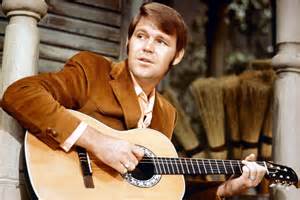
    Even in my rock and roll days I loved the music of Glen Campbell. His final gift before his death was a moving and deeply personal look at how Alzheimer’s affects a family in the documentary “I’ll Be Me”.  

    Glen Campbell

    One of my favorite Glen Campbell songs, “Try a Little Kindness”, is a message that we desperately need to hear and heed in our current societal climate.

    You got to try a little kindness
    Yes show a little kindness
    Just shine your light for everyone to see
    And if you try a little kindness
    Then you’ll overlook the blindness
    Of narrow-minded people on the narrow-minded streets

    I think it is fair to say that we have an abundance of narrow minded people loudly making their presence felt. People so narrow minded they could look through a peephole with both eyes. The lyrics of Try a Little Kindness seem like a simple and even naive sentiment. I would argue this little chorus is one of the most important and doable things that we as followers of Jesus can do to shine a little light. And we have been given that assignment by our Lord.

    “You are the light of the world—like a city on a hilltop that cannot be hidden.No one lights a lamp and then puts it under a basket. Instead, a lamp is placed on a stand, where it gives light to everyone in the house. In the same way, let your good deeds shine out for all to see, so that everyone will praise your heavenly Father.”

    Matthew 5:14-16, NLT

    I wrote a chapter about the power of kindness in my new book, Waking Up Slowly. Here is a brief portion of that chapter.

    The amazing thing about God’s grace is that He is not a God of a second chance. He is a God of chance after chance after chance ad infinitum. We are never outside God’s redeeming grace, no matter how much or how often we blow it.

    How is that even possible? We write off people after one or two offenses. How can God keep forgiving us after countless offenses? It doesn’t make sense. That is because grace does not make sense in our accounting system. So how does that work in our relationships with our community? The apostle Paul pulls it all together perfectly in his letter to the church in Ephesus:

    Instead, be kind to each other, tenderhearted, forgiving one another, just as God through Christ has forgiven you.

    Ephesians 4:32, NLT

    Kindness should be contagious because the God of the universe has been kind to us. That is part and parcel of the love story of the gospel.

    Don’t you see how wonderfully kind, tolerant, and patient God is with you? Does this mean nothing to you? Can’t you see that his kindness is intended to turn you from your sin?

    Romans 2:4, NLT

    I used to be impressed by talent and prestige. Now I find that I am more impressed by kindness. Billy Graham observed how we all—especially children—benefit from a little kindness: “Often the only thing a child can remember about an adult in later years, when he or she is grown, is whether or not that person was kind.” I find that to be so true when I run down the list of adults from my childhood. I filter them by that very trait. They were either kind or unkind.

    Paul recognized the importance of this contagious gift in his instructions to the church at Colossae:

    Since God chose you to be the holy people he loves, you must clothe yourselves with tenderhearted mercy, kindness, humility, gentleness, and patience. Make allowance for each other’s faults, and forgive anyone who offends you. Remember, the Lord forgave you, so you must forgive others. Above all, clothe yourselves with love, which binds us all together in perfect harmony. And let the peace that comes from Christ rule in your hearts. For as members of one body you are called to live in peace. And always be thankful.

    Colossians 3:12-15, NLT

    I have often said that if the church lived according to those four verses alone, there would be a spiritual awakening in the land. If we simply loved one another as Jesus commanded we could spark a revival. That is my job as a follower of Christ.

    Frederick Buechner captured the idea brilliantly: “If you want to be holy, be kind.”

    (Excerpted from Waking Up Slowly with permission of Tyndale Publishing)

    Today I remember Glen Campbell by determining to follow his advice.

    If you see your brother standing by the road
    With a heavy load from the seeds he’s sowed
    And if you see your sister falling by the way
    Just stop and say, you’re going the wrong way

    Everyone of us can be kind. Give it a try. When you do your light will shine.

    One act of kindness would be to donate to the Alzheimer’s Association to help find a cure for this cruel disease.

  • We Need This Parable More Than Ever

    We Need This Parable More Than Ever

    I can’t remember a more contentious cultural climate in my lifetime. Followers of Christ are wondering how to make a difference in an unfriendly environment. I think modeling a parable related by Jesus is desperately needed today. You know the story well.

     One day an expert in religious law stood up to test Jesus by asking him this question: “Teacher, what should I do to inherit eternal life?”

    Jesus replied, “What does the law of Moses say? How do you read it?”

    The man answered, “‘You must love the Lord your God with all your heart, all your soul, all your strength, and all your mind.’ And, ‘Love your neighbor as yourself.’”

    “Right!” Jesus told him. “Do this and you will live!”

    The religious “expert” should have quit right there. Instead he did what many of us try to do when Jesus tweaks our hearts. We look for the loopholes.

    The man wanted to justify his actions, so he asked Jesus, “And who is my neighbor?”

    He was hoping to put boundaries on his personal responsibility. The Greek and Hebrew definition of neighbor would have been someone nearby or that they associate with. That clarification would have eliminated Samaritans, Gentiles, and foreigners. That was the answer the scholar was hoping for when Jesus blew the lid off his selfish hope.

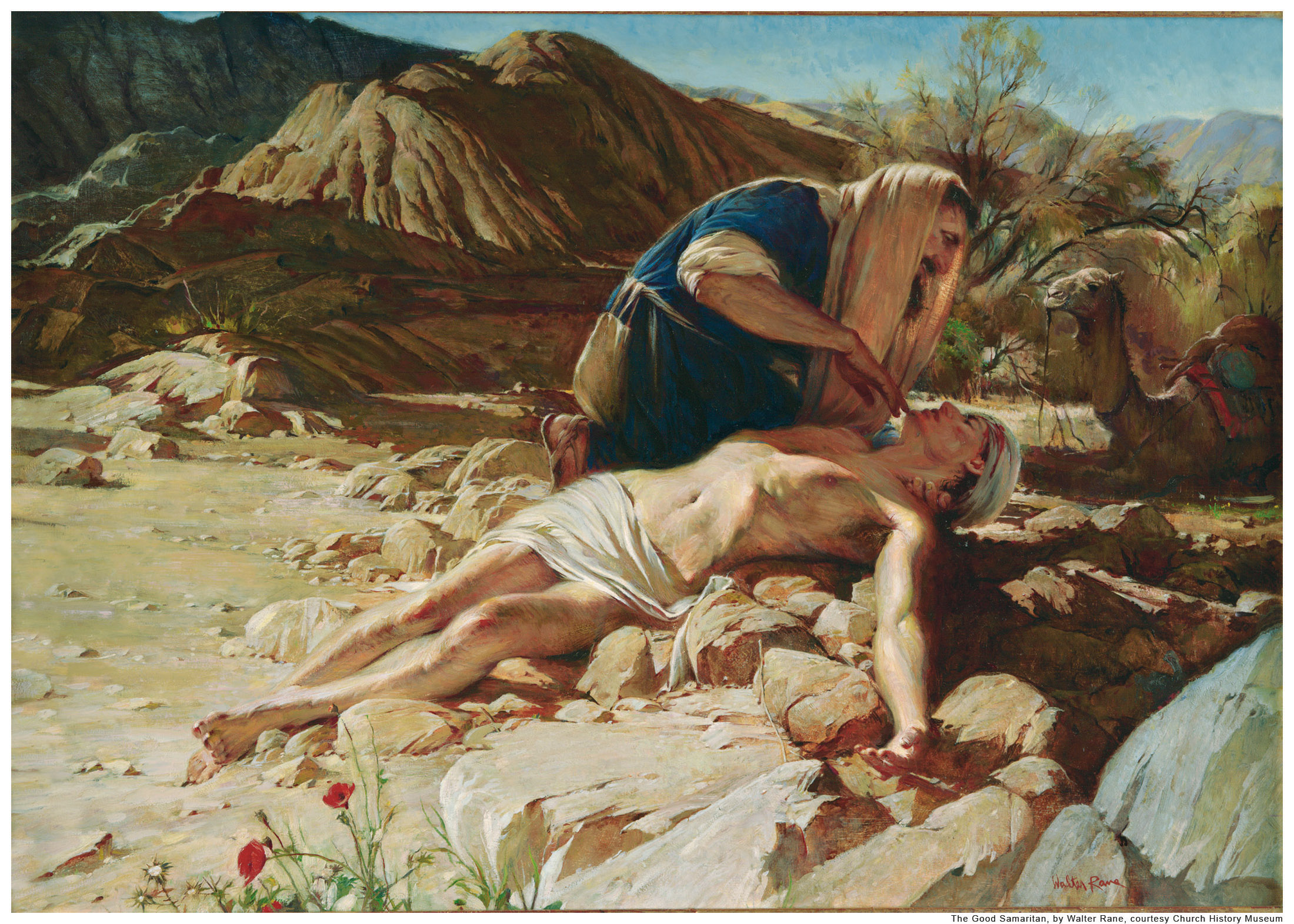
    Jesus replied with a story: “A Jewish man was traveling from Jerusalem down to Jericho, and he was attacked by bandits. They stripped him of his clothes, beat him up, and left him half dead beside the road.

    “By chance a priest came along. But when he saw the man lying there, he crossed to the other side of the road and passed him by. A Temple assistant walked over and looked at him lying there, but he also passed by on the other side.

     “Then a despised Samaritan came along, and when he saw the man, he felt compassion for him.  Going over to him, the Samaritan soothed his wounds with olive oil and wine and bandaged them. Then he put the man on his own donkey and took him to an inn, where he took care of him. The next day he handed the innkeeper two silver coins, telling him, ‘Take care of this man. If his bill runs higher than this, I’ll pay you the next time I’m here.’

    Jesus always looks on the heart. He knew exactly what the man was doing so He presented a scenario that had no nuance. The man was robbed and stripped so he could not be identified by his garments. He was simply a man in dire need. A priest would have known the law of love in God’s teaching. He chose to not get involved. He could have rationalized that touching the man would have made him unclean for priestly duties. A Levite or Temple assistant also walked by without helping. To be fair to both of them stopping to help could have put the Priest or Levite in personal danger. So the easy thing to do was look away and keep walking. The one who stopped and risked everything was reviled in that culture as an unclean sinner. The Samaritan not only put himself at personal risk but also gave unselfishly from his own resources to make sure the victim would be cared for. His gesture was an extraordinary example of compassion and kindness. The kind of mercy that turns heads. And then Jesus asked the uncomfortable question.

    “Now which of these three would you say was a neighbor to the man who was attacked by bandits?” Jesus asked. The man replied, “The one who showed him mercy.

    Then Jesus said, “Yes, now go and do the same.”

    The religious expert couldn’t even bring himself to call the man who was a good neighbor a Samaritan. He simply called him the “one who showed mercy”. Jesus drove home that there is no one outside of the mercy and compassion of God and therefore there should be none outside of our own caring.

    The parable Jesus told is a vital one for Christians in our contentious society. Followers of Jesus need to show kindness and compassion to the neighbors we are comfortable and especially to those we are are uncomfortable with. We can not look away when we encounter any person in need no matter what their color, status, beliefs, or behaviors might be. We are called to compassion and only that kind of faith will cause change.

    My friend Christ Taylor recently went to be with Jesus. He made this parable so practical in real life. His take on helping others will always be in my heart. Chris had this simple but profound approach to loving your neighbor.

    “If I can help someone I don’t need to think or pray about it. I just do it.”

    That is exactly what Jesus was saying to the religious expert. Don’t rationalize why you can’t help your neighbor. If you can help then you do it. That is how Christianity got an early foothold in an antagonistic culture.

    Professor E. Glenn Hinson writes, “The early Christians impressed the culture with high moral standards and their practice of charity for all, regardless of social status” (emphasis added). Today’s church could earn a doctorate in cultural impact just by integrating those two qualities into the fabric of daily life.

    That is the kind of faith that makes a difference. We are past the point of legislating, arguing, and litigating change. How can you risk loving and having compassion for those who oppose you? By remembering the gift of grace that you received from a merciful, loving, and exceedingly patient God. Two-thousand years later we still describe those who go above and beyond as Good Samaritans. We need God to raise up an army of those selfless servants to impact this culture. Volunteers are needed today.

  • Revisiting Grace Rules of Engagement

    Revisiting Grace Rules of Engagement

    I made a conscious decision a few years ago to focus on communicating the message of grace and identity in Christ. With that I decided to avoid the polarizing path of politics. Some have told me that is cowardly but I can honestly say there is no message more important to me than the liberating freedom of grace. I want to share the joy of living out of what Jesus has already accomplished and what God says is true about me.

    That I am a saint. A new creation. A beloved child of God. I relate to the mission statement of Paul when he wrote these words.

    But my life is worth nothing to me unless I use it for finishing the work assigned me by the Lord Jesus—the work of telling others the Good News about the wonderful grace of God. (Acts 20:24, NLT)

    I feel called to be a messenger of hope and grace. Plus I feel like the negative team has a pretty full roster of contributors. 

    I still believe that is my calling with these humble ramblings. But how does grace enter into the conversation when we have sincere disagreements over cultural and political issues?

    It is fascinating how two people can look at the same information and reach completely opposite conclusions. So I am going to offer the “Grace Rules of Engagement” as a roadmap for civil discussion. 

    • Sincere followers of Jesus can look at cultural or political issues and have very different opinions. Jesus loves His children on both sides of the argument.

    I know I have changed my views on some cultural issues over my years of walking with Jesus. I was a child in the era when divorce was a mortal sin. I absolutely am committed to the idea of a husband and wife taking their vows seriously. But I learned that the cultural shame of divorce caused many Christian women to feel trapped in relationships of abuse. Clearly that was not the desire of a loving Heavenly Father who ordained marriage. In those sad situations it is necessary to divorce an abusive spouse. In the pulpits of my youth the message was no divorce outside of adultery was ever justified. I had a blind spot about how a declaration that appeared Biblical could foster abuse. So many issues we discuss have similar and complex nuances. We need to discuss, not demonize.

    • The goal of a discussion should not be to win.

    Thoughtful discourse is impossible when one of the participants only cares about winning the debate. The goal of any conversation should be graceful exchange of ideas without rude interruptions, condescending gestures, or angry exchanges. I would rather have a goal of being winsome instead of winning. That attitude fosters conversation. 

    • People of different viewpoints should commit to listen. Nothing shows respect more than carefully listening to the arguments of those with whom you disagree and then gently offering thoughtful responses. 

    Listen to talking heads on television news shows as they “discuss” different points of view. As soon as one side starts talking the other shakes their head, smirks, and then interrupts and talks over the other person. How is that going to persuade anyone? Yet we tend to do the same thing when we have significant disagreements with people of faith. Listen. Really listen. Let them finish their point. Then respond in grace.

    • Ask questions.

    You will not influence another person by arguing. The way to connect is to ask questions and try to understand why they feel the way they do. I have found that many times people I talk with don’t have a solid reason for their feelings. That can be a opening to honestly discuss difficult topics. 

    • Climb out of your bubble

    Find out what the other person is reading and watching. Expose yourself to different points of view and encourage those you have disagreements with to do the same. If you are confident in your beliefs there should be no fear in being exposed to differing viewpoints.

    • All of us are a work in process.

    Every child of God is in process. I am a very different Christian than I was 20, 10, or even 5 years ago. I am growing (hopefully) in grace and truth. I strongly believed and said things years ago that I am grieved about today. Thankfully God was patiently working with my heart and gently shining the light of the Holy Spirit on my blind spots. I need to give that grace to others. 

    • Pray for wisdom and grace then leave the results to God.

    So what is the goal when you have sincere disagreements with another believer over cultural issues? Use the “Grace Guidelines” and relax. God may be using you to plant seeds in the heart of the other person. Maybe you have a blind spot that needs the refining work of the Holy Spirit. Share your heart with love and kindness and be open to the possibility that you may be the one who needs to change your heart.

    • Grace never cancels

    Grace does not “cancel”. Grace does not shame. Grace does not answer anger with anger. The person you totally disagree with may be crying out of pain and deep wounding. Perhaps a gentle answer will give hope. Grace does not lash out when challenged. Grace is kind and gentle.

    Being graceful can be a pain in the hind regions but it is what we are called to offer to others. Paul addresses this to the church at Colossae. 

    Since God chose you to be the holy people he loves, you must clothe yourselves with tenderhearted mercy, kindness, humility, gentleness, and patience. Make allowance for each other’s faults, and forgive anyone who offends you. Remember, the Lord forgave you, so you must forgive others. Above all, clothe yourselves with love, which binds us all together in perfect harmony. And let the peace that comes from Christ rule in your hearts. For as members of one body you are called to live in peace. And always be thankful.

    Let the message about Christ, in all its richness, fill your lives. Teach and counsel each other with all the wisdom he gives. Sing psalms and hymns and spiritual songs to God with thankful hearts. And whatever you do or say, do it as a representative of the Lord Jesus, giving thanks through him to God the Father.

    Colossians 3:12-17, NLT

    Perhaps the most important thing all of us can do to further the unity in the body of Christ is to memorize that passage and try to implement those words for 30 days. By the grace of God it could become a habit.

    Be kind to those who disagree and remember the words of author Alexander MacLaren. “Kindness makes a person attractive. If you would win the world, melt it, do not hammer it.”

  • My Thoughts and Prayers About Thoughts and Prayers

    My Thoughts and Prayers About Thoughts and Prayers

    One of the social media trends after a tragedy or sad event is to attack people of faith for offering “thoughts and prayers”. These posters assume that anyone expressing those sentiments don’t really care about solutions to whatever problem is being addressed. We have lost the ability to recognize two things can be true at once. I may get mocked and/or canceled by some for the following statement.
    I honestly believe I can desire cultural change while praying for ultimate hope available through Christ. I don’t force that on others. I try to live it although I know I do that imperfectly. That is the power of grace. I don’t have to be perfect for God to use me to love others. So there is the challenge for Christians in this season. How can we love those who assign terrible motives to what may be a completely sincere response? We start by seeing if anything in the criticism is valid.

    I spent 40 years in television production trucks so rough language doesn’t impact me much. But I have to admit the language and anger directed toward Christians who express “thoughts and prayers” is stunning. It is easy to dismiss such vulgar statements with defensiveness and anger. I have learned that there are many ways to address criticism. For too many years my preferred method was outright dismissal with a side of disdain.

    I have been working on a project with former Pittsburgh Pirates manager Clint Hurdle. We discussed the criticism that both of us received in our careers. His was much more public than mine but I could at least relate. Clint said he learned to honestly evaluate even the ugliest criticism. He knew he could toss much of it away because he had evaluated his heart and motives in making a decision. But he also learned that sometimes there is a valid critique hiding in the vitriol. That bit of honest criticism is what he prayerfully took away while discarding the rest. So is there a lesson there for followers of Jesus?

    I think we can ask for God’s grace towards those who are judgmental and unkind. Believe me, I know that is not easy and not possible apart from His grace. I don’t mean the next statement to be condescending to those who do not share my faith because I have been on both sides. If I did not have the hope that there is more than this existence I would likely be just as frustrated and angry.

    So if my faith is real I need to back up, show kindness, and continue to love those who might not show those same reactions toward me.

    As for finding some valid criticism in the vitriol I will throw this out for you to “think and pray” about. When we type that we are sending “thoughts and prayers” I believe that Christians must also be looking for ways to show love through our actions. Thoughts and prayers need hands and feet displaying the love of Christ to have eternal impact.

    It is hard to spend much time in the New Testament and not realize our challenge for Christians toward those hurting, in need, and devoid of hope. Here is a very small sample: 

    If anyone has the world’s goods and sees his brother in need, yet closes his heart against him, how does God’s love abide in him? (1 John 3:17 , ESV)

    What good is it, my brothers, if someone says he has faith but does not have works? Can that faith save him? If a brother or sister is poorly clothed and lacking in daily food, and one of you says to them, “Go in peace, be warmed and filled,” without giving them the things needed for the body, what good is that? So also faith by itself, if it does not have works, is dead.
    (James 2:14-17, ESV)

    Let each of you look not only to his own interests, but also to the interests of others. (Philippians 2:4 , ESV)

    The charge of hypocrisy leveled at the church has a lot to do with our obsession with sin management over living a life of kindness, grace, and service. If I am not living out of grace, then Jesus’ arms aren’t reaching as far as they could through me. Loving one another is clearly step one. The time to start making that a priority is today.

    So I am absolutely fine with your sincere expression of thoughts and prayers when people are hurting. But I am challenging myself and you to be willing to be the hands and feet that reflect the love of Christ. Don’t focus on the anger of those who don’t share your hope. Focus on the One who has given you hope in this challenging season and be a light in the darkness.