Category: Uncategorized

  • Glen Campbell Had it Right!

    Glen Campbell Had it Right!

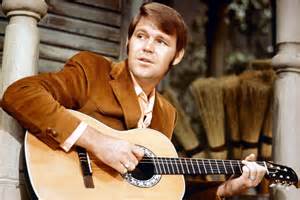
    Even in my rock and roll days I liked Glen Campbell. There was something about his smile and warmth that made him seem real. Glen seemed like the kind of person you could approach and he would be kind. You never know with celebrities so I was delighted to hear from sound technicians who worked with him that he was exactly that. Kind and approachable. His final gift before his death was a moving and deeply personal look at how Alzheimer’s affects a family in the documentary “I’ll Be Me”. 

    So that background makes this week’s musing even more impactful.

    Glen Campbell

    One of my favorite Glen Campbell songs, “Try a Little Kindness”, is a message that we desperately need to hear and heed in our current societal climate.

    You got to try a little kindness
    Yes show a little kindness
    Just shine your light for everyone to see
    And if you try a little kindness
    Then you’ll overlook the blindness
    Of narrow-minded people on the narrow-minded streets

    Boy howdy do we have some narrow minded people loudly making their presence felt. People so narrow minded they could look through a peephole with both eyes. The lyrics of Try a Little Kindness seem like a simple and even naive sentiment. I would argue this little chorus is one of the most important and doable things that we as followers of Jesus can do to shine a little light. And we have been given that assignment by our Lord.

    “You are the light of the world—like a city on a hilltop that cannot be hidden. No one lights a lamp and then puts it under a basket. Instead, a lamp is placed on a stand, where it gives light to everyone in the house. In the same way, let your good deeds shine out for all to see, so that everyone will praise your heavenly Father.” (Matthew 5:14-16, NLT)

    I wrote a chapter about the power of kindness in my new book, Waking Up Slowly. Here is a brief portion of that chapter.

    The amazing thing about God’s grace is that He is not a God of a second chance. He is a God of chance after chance after chance ad infinitum. We are never outside God’s redeeming grace, no matter how much or how often we blow it.

    How is that even possible? We write off people after one or two offenses. How can God keep forgiving us after count- less offenses? It doesn’t make sense. That is because grace does not make sense in our accounting system. So how does that work in our relationships with our community? The apostle Paul pulls it all together perfectly in his letter to the church in Ephesus:

    Instead, be kind to each other, tenderhearted, forgiving one another, just as God through Christ has forgiven you. (Ephesians 4:32, NLT)

    Kindness should be contagious because the God of the universe has been kind to us. That is part and parcel of the love story of the gospel.

    Don’t you see how wonderfully kind, tolerant, and patient God is with you? Does this mean nothing to you? Can’t you see that his kindness is intended to turn you from your sin? (Romans 2:4, NLT)

    I used to be impressed by talent and prestige. Now I find that I am more impressed by kindness. Billy Graham observed how we all—especially children—benefit from a little kindness: “Often the only thing a child can remember about an adult in later years, when he or she is grown, is whether or not that person was kind.” I find that to be so true when I run down the list of adults from my childhood. I filter them by that very trait. They were either kind or unkind.

    My memories from high school have changed too. I once sorted classmates by prettiness and athletic ability. Now I sort my high school acquaintances by kindness. All the things that identified us in high school are meaningless now. Who cares if you were a cheerleader, quarterback, National Merit scholar, or the kid trying to find someone to sit with at lunch? What matters is whether you were kind and considerate of others. I spent my high school years walking a tightrope, trying to be part of the “in” group, while trying to live out my newfound faith in Jesus. If I failed to be kind in that awkward dance, I am truly sorry.

    Paul recognized the importance of this contagious gift in his instructions to the church at Colossae:

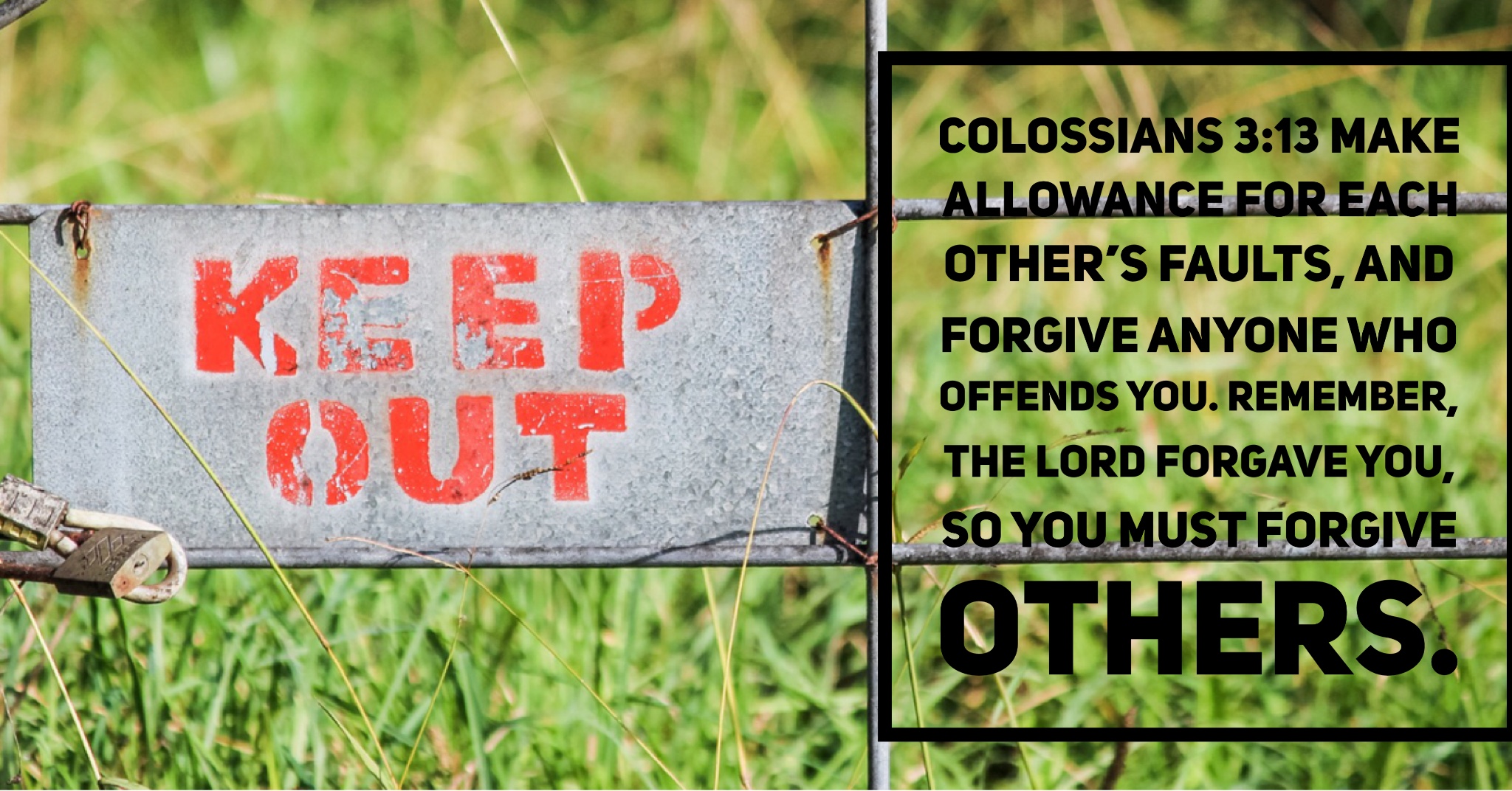
    Since God chose you to be the holy people he loves, you must clothe yourselves with tenderhearted mercy, kindness, humility, gentleness, and patience. Make allowance for each other’s faults, and forgive anyone who offends you. Remember, the Lord forgave you, so you must forgive others. Above all, clothe yourselves with love, which binds us all together in perfect harmony. And let the peace that comes from Christ rule in your hearts. For as members of one body you are called to live in peace. And always be thankful. (Colossians 3:12-15, NLT)

    I have often said that if the church lived according to those four verses alone, there would be a spiritual awakening in the land. If we simply loved one another in the body of Christ, we could spark a revival. That is my job as a follower of Christ.

    Frederick Buechner captured the idea brilliantly: “If you want to be holy, be kind.”

    (Excerpted from Waking Up Slowly with permission of Tyndale Publishing)

    Today I remember Glen Campbell by determining to follow his advice.

    If you see your brother standing by the road
    With a heavy load from the seeds he’s sowed
    And if you see your sister falling by the way
    Just stop and say, you’re going the wrong way

    Everyone of us can be kind. Give it a try.

    One act of kindness would be to donate to the Alzheimer’s Association to help find a cure for this cruel disease.

  • The Minefields of Marriage

    The Minefields of Marriage

    Real and honest relationships are messy. Marriage is at the top of that difficulty list. If you take the chance to be known and get hurt it is easy to build a wall. If you take another chance and get the same result the temptation is to build an impenetrable fortress around your heart. And that is tragic. I see that happening with too many people around me.

    Sara Groves is a powerful lyricist with a great voice. That’s a very appealing combo plate. Her song entitled “It’s Me” is amazing. She captures the insecurities, old stories about our past and selfishness that leads to relationship meltdowns. And those moments seem to come out of nowhere.

    weather came and caught us off our guard
    we were just laughing and feelin’ alright
    had such a great time just last night
    we walked into a minefield undetected
    you took a tone and I took offense
    anger replacing all common sense

    oh run for you life
    all tenderness is gone
    in the blink of an eye
    all good will has withdrawn

    I am sobered by the imagery of the minefield. Hidden among the beautiful flowers and lush grass are deadly relationship mines. A misstep here and you explode my insecurity. Step over there and you detonate all of those old hurts and shame from my past. Step here and you get wounded from the shrapnel of my selfishness. And all it takes is a tone or not meeting a poorly communicated need to blow up all tenderness.

    God designed us to travel this journey in community. You mature as a Christian when you trust God and others with what is true about you. That means taking off the masks and shining light in the dark places. That has always been scary for me because I imagine I am uniquely sinful. That others have it more together than me. But as I have begun to trust others with me and they with me I am convinced there are no together people. You find out we are all messed up. That is why we need the daily and moment by moment grace of the Gospel. Sara Groves writes about the sad pattern that most of us follow when we hurt or get hurt.

    incomprehensible layers of isolation
    now your the man with a heart of stone
    making me pay here by being alone
    seemingly justified righteous indignation
    now I’m the woman who holds all her pain
    looking for somebody else to blame

    It makes me sad to hear those lyrics because I have been there. My default for too many years to being hurt was isolation and hiddenness. But it doesn’t have to be that way. I have read and struggled with words from Paul that says we are to love our wives as Christ loved the church. Sure. And then I will go win the US Open Golf Tournament. Same chance. But maybe it is not as daunting as we think. I enjoy reading The Message especially for passages I have read dozens if not hundreds of times. It often gives me a fresh perspective. Here is that verse from The Message.

    Husbands, go all out in your love for your wives, exactly as Christ did for the church—a love marked by giving, not getting. (Ephesians 5, The Message)

    A love marked by giving. Maybe that is possible. A love that extends grace that is unmerited. Just like I received from Christ. A love that refuses to stay hidden even when that feels like the safest place to be. A love that expresses needs as a sign of strength and not weakness. My friend Bill Thrall says that the phrase “I don’t need you is the mantra of the wounded.” I do need my bride’s affirmation and love. I do need friends who know me and still love me. I do need a Savior who patiently molds me without condemnation. Yet I walk through a minefield of lies and past hurts and self-doubt every day. But that is not who I am anymore and I am trusting this truth.

    This means that anyone who belongs to Christ has become a new person.
    The old life is gone; a new life has begun! (2 Corinthians 5, NLT)

    So when I step on a mine and get wounded I call out to Jesus. “It’s me. Your child. I need you to love me so I can love others out of your amazing love and grace.” With Christ I can summon the courage to be known by others because Jesus knows me and loves me without fail. On that foundation I can build healthy relationships. Ruth Graham said that a happy marriage is the union of two good forgivers. There is so much truth in that. But first you have to accept and recognize how much you have been forgiven. And live out of what is now true about you..


  • Can Money Buy Love?

    Can Money Buy Love?

    A new channel on satellite radio features songs by the Beatles. Today a song took me back to 1964 when I was an overweight nerd struggling to find my place in the world. What a difference fifty-three years makes. Now I am not overweight.

    “Can’t Buy Me Love” reached the top of the charts for the group. When asked about the deeper meaning of the song Paul McCartney gave this reply. “The idea behind it was that all these material possessions are all very well, but they won’t buy me what I really want.” Sing along with me aching Boomers…

    I’ll buy you a diamond ring my friend if it makes you feel alright
    I’ll get you anything my friend if it makes you feel alright
    ‘Cause I don’t care too much for money, money can’t buy me love

    I’ll give you all I got to give if you say you love me too
    I may not have a lot to give but what I got I’ll give to you
    I don’t care too much for money, money can’t buy me love

    A couple of years later McCartney wondered if the lyrics were untrue.  “It should have been “Can Buy Me Love” when reflecting on the perks that money and fame had brought him. I wonder how Paul McCartney feels today with fifty more years of life mileage on the odometer. I suspect he now feels the original idea was correct. Money really can’t buy you love.

    It is a deception of the world that money can buy you love or happiness or peace. I will be honest and report that I would prefer to have money over the the alternative. But I have learned that money is in no way a predictor of happiness. Some of the most miserable people I know could buy and sell me with their pocket change. It is human nature to believe that more money, some possession gained or a title achieved will finally make us happy.

    I have been on both sides of the money thing. And I can tell you without reservation that money is unrelated to happiness. Author Tim Keller writes that “If you seek righteousness first, you get happiness. If you seek happiness first, you get neither”.

    Happiness is connecting with the One who made me. When that identity in Christ becomes my focus I can find joy in even difficult circumstances.

    In his letter to the church at Corinth Paul made the amazing statement that “Whatever happens, my dear brothers and sisters, rejoice in the Lord. ” (Philippians 3:1, NLT)

    Where does that attitude come from? I can guarantee it doesn’t come from money. I accept the sad things in life because I am in relationship with a God who understands suffering and offers comfort that is inexplicable. Joni and I have stared down heartache and tragedy and found peace. Jesus had a thought or two on real joy and it’s source.

    When you obey my commandments, you remain in my love, just as I obey my Father’s commandments and remain in his love. I have told you these things so that you will be filled with my joy. Yes, your joy will overflow! This is my commandment: Love each other in the same way I have loved you. (John 15:10-12, NLT)

    I am nowhere close to saying that my joy is wholly mature. But I have hope as I write this. Hope that transcends sports cars, money, power, fame and even the difficulties of life. I have hope because I have found the source of joy. Paul wrote a joyful letter to the church at Philippi.

    Don’t worry about anything; instead, pray about everything. Tell God what you need, and thank him for all he has done. Then you will experience God’s peace, which exceeds anything we can understand. His peace will guard your hearts and minds as you live in Christ Jesus. (Philippians 4:6-7, NLT)

    The Beatles were right in their original evaluation. Money can’t buy you love. Randy Alcorn wrote about two ways to use money. “When you leave this world, will you be known as one who accumulated treasures on earth that you couldn’t keep? Or will you be recognized as one who invested treasures in heaven that you couldn’t lose?”

    I want to invest in heavenly treasures. Placing Christ at the center of my life allows me to invest my treasures wisely because I trust that He is in control. I have been given the right to be a child of God. I couldn’t buy that either. It is a gift of grace. The gift is available to anyone. You just have to receive it.

  • Ready for a Better Way?

    Ready for a Better Way?

    Even occasional readers of my humble ramblings know that the start of my faith narrative was mired in legalism. My first church believed you could not spell denomination without “no”. Starting from that faulty foundation led me to years of sadness, tiredness and performance bondage.

    I replayed my long and fragmented journey to grace and freedom as I listened to a song from Hillside United titled, “From the Inside Out”.

    One thousand times I’ve failed
    Still your mercy remains
    Should I stumble again
    I’m caught in your grace

    Everlasting your light will shine when all else fades

    I remembered day after day of agonizing self-loathing because I kept failing. I did not understand His mercy nor did I believe I could fall on His grace. I was taught that such an attitude showed a lack of obedience and a dependence on “cheap grace”. Somehow I missed the message of Jesus to the religious hypocrites as I was influenced by the preaching of shame.

    I was released from that doctrinal prison just a few years ago. Moralism is answering to the wrong source of authority. Legalists often default to religious traditions rather than the Word of God.

    Legalism takes the sweet Gospel of Jesus Christ and mixes in some “churchified” version of the law. Church by-laws occupy equal footing with God’s Word. Righteousness is no longer about Christ but about right behavior as only they can define it. Legalism cherry picks verses that support behavioral control while conveniently ignoring dozens of verses about grace, forgiveness, kindness, love, gentleness and forbearance.

    Focusing on right behavior can make you moral and perhaps a good person. It does not make you righteous. Such focus is not much different (if at all) from an agnostic or sporadic church-goer who really tries hard to do right and moral things. Tim Keller wrote this provocative thought about legalism in his wonderful book The Reason for God.

    “The devil, if anything, prefers Pharisees—men and women who try to save themselves. They are more unhappy than either mature Christians or irreligious people, and they do a lot more spiritual damage.”

    I spent many long and frustrating years trying to do all the right things to be righteous. I got tired. I became discouraged. I reached the point of brokenness that allowed me turn over the keys to Christ. I reached the point where I no longer had to be right. I had reached the point where I didn’t want to wear a phony mask of holiness. I had reached the point where I was willing to trust God completely with everything about me. I had reached the point where I was ready for grace. And that is the day that I began to experience what Hillside United sings about in today’s song.

    My heart and my soul
    I give you control
    Consume me from the inside out

    Let justice and praise become my embrace
    To love you from the inside out

    And the cry of my heart is to bring you praise from the inside out

    That is where real change happens. From the inside out. Moralism can restrain sin but only the Holy Spirit gives you the power to not sin. Moralism will always fail. Either you will fail to live up to your standards or you will fail by damaging those you love.

    If you are tired enough, discouraged enough, wounded enough and ready to give up then I have a very odd statement to make.

    You are in a wonderful place. You are ready for grace.

    Do not let any part of your body become an instrument of evil to serve sin. Instead, give yourselves completely to God, for you were dead, but now you have new life. So use your whole body as an instrument to do what is right for the glory of God. Sin is no longer your master, for you no longer live under the requirements of the law. Instead, you live under the freedom of God’s grace. (Romans 6, NLT)

    You are ready for change from the inside out. God is waiting for you to experience His grace. Legalism is a dead end street to misery. There is a better way to live.

    In freedom.

    In Christ.

    (Waking Up Slowly offers a 21 day journey to connect more fully to God and one another.
    Check it out here.)

  • Maggie’s Favorite Chapter

    Maggie’s Favorite Chapter

    Here is a free preview of Chapter 21 in Waking Up Slowly. You can get an idea of how you can use these short chapters as daily devotionals to connect more fully to God, yourself, and one another. Maggie and I hope you enjoy!Maggie backyard

    SOUNDS OF SILENCE

    Let us be silent that we may hear the whisper of God.
    Ralph Waldo Emerson

    I love to watch Maggie when she is overseeing her backyard domain. Sometimes she goes to the fence and lets out a couple of deep-throated barks to let some perceived threat know that she is on duty. Or she patrols every inch of the yard, sniffing as if it is her first and not her one-thousandth time to do this. Sometimes she stops to growl at a feral cat behind the fence.

    But the routine I love most is when she lies in the yard with head high, surveying her kingdom in silence. She is completely dialed in, listening for any disturbance that might need her attention. Maggie is most able to take in her world when she drops the barking and growling.

    Well played, Maggie. You are doing something most of us humans have a difficult time mastering—simply being silent and observing God’s world. 

    There is hardly ever a complete silence in our soul. God is whispering to us well-nigh incessantly. Whenever the sounds of the world die out in the soul, or sink low, then we hear these whisperings of God. He is always whispering to us, only we do not always hear, because of the noise, hurry, and distraction which life causes as it rushes on.

    Sounds like our lives, doesn’t it? And yet that observation was written in the mid-1800s by hymn writer Frederick W. Faber. More than a century and a half later, it hasn’t gotten quieter. It is hard to imagine that the sounds of the world are not exponentially more cacophonous today. Perhaps the bigger issue isn’t that the world is noisier and more distracting than ever. The relational danger may be our ability to pull into the cocoon of noise-canceling headsets and remove ourselves completely from our surroundings. Sometimes it helps concentration to limit the noise. The challenge is to not let headphones and earbuds become another impediment to finding  sacred moments.

    Recently, I walked up to one of my younger television crew members and went through a very well-thought-out description of what we needed for the broadcast that night. I waited for his confirmation, but instead he turned, pulled out a well-hidden earbud, and looked surprised.

    “What?”

    I had no idea he was in another world while I was talking to him. He had no idea I was lurking right next to him and talking. It was no big deal. We laughed, and I repeated the instructions. Going forward, I did determine to first make eye contact with whomever I was talking to for the best results. It made me think about how often we miss moments of laughter or relational opportunities when we retreat from others.

    Yesterday when I took Maggie for a walk, I instinctively reached for my phone and headset. Typically, I listen to music along the way. I can get lost in music, which is not a bad thing. But today I knew I needed something else. I needed to be quiet, reflective, and prayerful about some things that were troubling my soul.

    To be honest, some tunes from my rock-and-roll days would have been a much-preferred course. But I knew I needed to think and pray. So while Maggie excitedly sniffed and explored, I prayed for a person who has been adversarial. Did I want to do that? Hardly. But I knew it was important, and I needed quiet to allow the Holy Spirit to speak to my heart. There is something healing and helpful in praying for those who oppose us. It reminds me that God is the One in control. When I trust that, I can relax.

    My walk in silence was indeed soothing. It comes as no surprise to find that studies have shown that excessive noise releases stress hormones in the body. Daniel Gross writes, “People living in loud environments experience chronically elevated levels of stress hormones. . . . The word ‘noise’ comes from a Latin root meaning either queasiness or pain.”

    It will also come as no surprise that the Owner’s Manual addresses our need for silence and solitude.

    Let all that I am wait quietly before God, for my hope is in him.
    He alone is my rock and my salvation, my fortress where I will not be shaken.
    (Psalm 62:5-6)

    Perhaps the most consistent role model for the need for solitude and silence was Jesus.

    Very early in the morning, while it was still dark, Jesus got up, left the house and went off to a solitary place, where he prayed.
    (Mark 1:35, NIV)

    Jesus often withdrew to lonely places and prayed.
    (Luke 5:16, NIV)

    Jesus went out to a mountainside to pray, and spent the night praying to God. When morning came, he called his disciples to him and chose twelve of them.
    (Luke 6:12-13, )

    Jesus, knowing that they intended to come and make him king by force, withdrew again to a mountain
    by himself.
    (John 6:15, NIV)

    Jesus understood the need to recenter and reconnect with the Father. He understood the power of quiet to be able to hear the voice of His Father. How can we think we are able to function spiritually and emotionally without occasional silence and solitude? Finding periods of quiet is different from seeking a day or extended time of Sabbath that we explored earlier. This is not something I am accomplished at. I have probably had more intentional, undistracted time during this book project than I have had in years, if not ever. Noise becomes a habit. If I am alone, I need the television in the background or music in my ears. I am learning that sometimes I just need silence. Silence that used to make me feel a bit unsettled is now becoming a welcome respite to think and pray. A.W. Tozer said that “only after all the noise has spent itself do we begin to hear in the silence of our heart, the still, small, mighty voice of God.”

    That requires us to slow down, give up our perceived control, and simply be quiet. I can tell you it does not come naturally in this culture. And this is another reminder that devices can be a wonderful tool, but they must be silenced as well.

    I don’t know if it was my three-year-old granddaughter Clara’s peeking at my manuscript that inspired her words of wisdom when she was having lunch with Joni and me recently. Before we sat down at the table, Clara had been playing with a toy cell phone. She dramatically turned off the sound and put the toy device facedown on the table.

    “I calmed my phone!” Clara proclaimed. Words for all of us to live by, sweetheart!

    Being alone and quiet so you can hear the still voice of the Holy Spirit is about a heart attitude more than location. For me, there is one really important benefit of reflective quiet in the presence of God: it interrupts my typical prayer time of delivering a monologue to God. I was taught to make my requests known in prayer after a little perfunctory praise. I went down my list, and I was done. One-way conversation. I am outta here!

    Forcing myself to be quiet gives me a chance to look inward. To see where I might need to allow the light of God’s grace to shine on some dark area. I allow myself to be fully in the moment and not worried about tomorrow. I allow myself the time to reflect on who I am and how the Father looks at me. It clears my mind to clearly think about what needs to be done. I remind myself that I don’t have to constantly manage and be in control.

    Although we looked at Psalm 46:10 as a deterrent for busyness in chapter 3, I think it also applies to the idea of quieting down.

    Be still, and know that I am God!

    The Hebrew word for “be still” might be better translated as “cause yourselves to let go” or “let yourselves become weak.” Sitting quietly with my Bible open to a psalm invites the quiet voice to speak. Often there is nothing but stillness. Isn’t that how a good relationship works? When you feel relaxed and protected with your spouse, you can have periods of silence that actually speak volumes about how you feel about each other. It is in quiet solitude with God that I am wholly present and available to Him. Is there a better indicator of affection  than  undivided attention?

    If my mind is left unattended, it is like Maggie as a puppy. It runs randomly and without restraint. I have had to learn to slow down, unplug, and be still. And I have had a major surprise: I am really enjoying it.

    I have practiced this discipline often on this journey. My prior history when writing is to research, research, research. To be sure, I have done a fair measure of background study while writing this book. But more often than usual, I have unplugged the device and turned off all the distracting noise-makers. I have sat in silence and meditated on what God is teaching me. I have thought about what I would like to communicate and asked the Holy Spirit to give me creative direction. Without fail, I have found an idea or a story in those moments of silence. It has been one of my biggest takeaways from this experiment.

    It is a lesson I intend to build on. God is powerful enough to teach an old dog new tricks. I invite you to find a place to be quiet today. In the sounds of silence, God may very well meet you.

    GOD’S TAKE

    For God alone, O my soul, wait in silence, for my hope is from him.

    (Psalm 62:5, ESV)

    A DOSE OF GRACE

    Find some time to give God your undivided and silent presence. Start with five or ten minutes. It may feel awkward. Simply tell God that you desire to be in His presence. Tell Him that you want to be attuned to His direction or correction. But most of all, tell God that you simply want to receive His love. Remember there is no condemnation if your mind wanders. This will take some practice, but it is worth it.

    Want to read more or find out how to connect more fully with God in 21 days? Go to wakingupslowly.com for more information on how to order.


  • Remembering When I “Knew It All”…

    Remembering When I “Knew It All”…

    OK, I admit it. I like country music. I also like rock, Motown, jazz, pop, folk, gospel, and classical music. I once tried to distance myself from country in an ill-fated attempt to be sophisticated. To quote an old family idiom, that effort was like putting earrings on a hog. I am a small town boy and my roots are in the hills of Kentucky. So I no longer deny that I have a few banjos and some fine squirrel recipes in my genetic pool.

    In addition to my chromosomal predisposition toward Nashville, I am developing a deep appreciation for the honesty of country music. It is one of the few safe places to discuss God, country, and old-fashioned values without fear of politically correct busybodies getting their undergarments twisted. We all laugh at a few outrageously titled country tunes, but there are many songs that reflect exactly who I am: a proud father, a husband who married way up, a patriotic American, and an unabashed follower of Jesus.

    Recently a song from country duo Montgomery Gentry popped up on the iPod. The title track from their CD Back When I Knew It All resonates with me. The lyrics describe the passage for many of us:

    Back when the world was flat and mama and daddy didn’t have a clue
    That was back
    Back when a pitcher of beer and a couple shots made me bulletproof
    Back when God was a name I used in vain to get a point across when I got ticked off
    Lord I’m learning so much more
    Than back when I knew it all

    I realize now how little I really knew about being a man and about walking with Jesus when I started out. I had bad theology based on performance so it should come as no big surprise that I was incredibly inconsistent in how I lived out my faith. I was judgmental because I knew exactly what those “sinners” should be doing. I didn’t know their circumstances or challenges but that did not matter. I didn’t care enough to pray for them or come alongside them to help. I just knew they were wrong. At least I felt that way back when I knew it all. Here is another part of the song:

    I’ve learned that love is a woman that will settle you down
    A Sunday sermon can turn life around
    Man I can’t believe all the answers I’ve found
    Since, back when I knew it all.

    Paul wrote these words to the church at Colossae:

    And now, just as you accepted Christ Jesus as your Lord, you must continue to follow him. Let your roots grow down into him, and let your lives be built on him. Then your faith will grow strong in the truth you were taught, and you will overflow with thankfulness (Colossians 2:6-7 NLT).

    I am grateful for how much God has taught me since “I knew it all.” The first step was realizing how untrue that feeling was. Now I am amazed at how much I don’t know. The second step was seeking the source of real truth. The journey I am on right now is to really trust that truth and not just know it. I am overflowing with thankfulness that God was patient during the time that I thought I knew it all.

    I am learning slowly that trusting truth really does transform you. Especially when you realize you don’t know it all.

    Check out my new book at WakingUpSlowly.com

  • Freedom is a Gift to be Cherished

    Freedom is a Gift to be Cherished

    I love the Fourth of July. My beloved and I had our first unofficial “date” on an Independence Day celebration in Fort Collins, Colorado many, many years ago. A song from Five for Fighting  called “Freedom Never Cries” is timely for this holiday. Writer/singer John Ondrasik writes personal and powerful songs that resonate with me. “Freedom Never Cries” is a song about how we take freedom for granted. Ondrasik talked about the song in an interview posted at liveDaily.

    “It was definitely a statement song that has a point of view. I think it kind of speaks to the fact that, I know at least for myself, we tend to only appreciate things when we need them. Growing up here in the bubble of the United States, we are statistically lucky to be born into this country where freedom, to us, seems natural. We couldn’t imagine anything else. I think sometimes we don’t recognize that. Freedom never cries. Freedom doesn’t sit in the corner and whine and make us recognize it, per se. I think if you look at the world in general today, many countries don’t experience the same freedom of expression, freedom of religion, women’s rights, freedom of the press that we have. Obviously, that leads to a majority of the world’s conflicts today. I wanted to recognize that, “Hey, freedom has a price, it’s not a gift.” It’s a little reminder to ourselves, we’re some of the lucky ones here.”

    Indeed. Perhaps we should take a deep breath and be grateful instead of displaying the behavior we see everyday in the news. Freedom is like your health. You don’t fully appreciate either one until they are gone.

    H.L.Mencen once said, “We must be willing to pay a price for freedom, for no price that is ever asked for it is half the cost of doing without it.” Think about that.

    And think about the lyrics of this song.

    I never loved the soldier until there was a war
    Or thought about tomorrow
    ’til my baby hit the floor
    I Only talk to God when somebody’s about to die
    I Never cherished Freedom
    Freedom never cries…


    Thank God today for the blessing of freedom. Thank God for the men and women who will not be home this holiday as they serve to keep our freedoms intact. I cherish the freedom in America.

    I also cherish another kind of freedom.

    It was for freedom that Christ set us free; therefore keep standing firm and do not be subject again to a yoke of slavery.  (Galatians 5:1, NASB)

    I am learning to believe who Jesus says I am and live out of that truth. The good news? It is freedom. Paul gave some great insight into how to live out this freedom that is ours.

    For you have been called to live in freedom, my brothers and sisters. But don’t use your freedom to satisfy your sinful nature. Instead, use your freedom to serve one another in love. For the whole law can be summed up in this one command: “Love your neighbor as yourself.”  (Galatians 5:13, NLT)

    Cherish both freedoms as a citizen of the United States and as a citizen of heaven. And take neither for granted.

    Dave Burchett is the Author of Stay and Waking Up Slowly. A portion of every sale from both books goes to train service dogs for wounded veterans through Patriot Paws.