Tag: grace

  • ENOUGH! What Can I Do?

    ENOUGH! What Can I Do?

    I am saddened, sickened, and heartbroken as I keep hearing stories like the murder of Ahmaud Arbery in Georgia. I have reached the point where I believe that feeling outrage and dismay is no longer enough for followers of Jesus. I want to do something. Today I yield my space to two black brothers in Christ. Montagne McDonald is the teaching pastor at the historic King Solomon Missionary Baptist Church in Nashville, Tennessee. Duke Barnett is a respected leader and educator in Garland. I asked these two good and thoughtful men an important question. What can I do as a white brother in Christ to make a difference in our culture? Duke and Montagne, the forum is yours.

    Duke Barnett:

    For me, I wrestle with this topic because so many of my White brothers and sisters recognize the rampant inequalities, racism, and disrespect for people of color. They also recognize God’s love for people of color. However, there are many Whites (and Blacks) who call themselves Christian but are merely wolves in sheep’s clothing. So, that’s a challenge for me.

    Here is my humble opinion with some life-lived experiences sprinkled in.

    1) White people must recognize they have a members of their race/culture who despise people of color and are simply racists. Some of them are wolves in sheep’s clothing as well. They must stop making excuses for them and really just call it like it is. It’s like the old phrase, I must fix my own house before trying to fix someone else’s house.

    2) People of color must come to the realization that we are not innocent either. We often contribute to the oppression of each other. Even some of us in higher tax brackets who may not experience racism at high level, contribute to our oppression by doing things that promotes our own interests and not those of the greater good. After we make it, we sometimes tell our people to “pull yourself up by your bootstraps like I did”. That’s hard for our people when the majority has dealt with systematic racism all of our lives and we can’t buy boots. We people of color have to do better as well with taking care of our own house, race/culture No one else will do it for us.

    We have to speak truth to power and call it like it is. Not just to the other races/cultures, but mainly to our own.

    Montagne McDonald:

    Thank you for having a heart for your brothers and sisters that go beyond lip-service and church-speak. Many of our white brothers and sisters have said they hate racism and love people of color yet remain silent in times like these. It is sometimes hard to know if you have an ally when you cannot find them when they are needed. Silence says more than people think. However, beyond that it is important that our Christian brothers and sisters make an effort to also understand the theological issue of racism and injustice as well. I have heard many times from my white brothers and sisters in ministry that social justice is not of God and is in fact an enemy to Christianity. I believe there is either a misunderstanding of what social justice is, or an unwillingness to accept that there is a need for social justice. When the society we live in has police procedures and laws that make it easier for those who do not see black people as human to perpetrate violence against them, that is an injustice. When we have a judicial system that encourages stacking the deck against the poor as they await sometimes years for a “fair trial” sitting in a prison that is publicly traded, that is an injustice. Our voices should speak against it. Our votes should speak against it. You asked, “What can I do as a white brother or sister in Christ to make a difference in our culture?” You are on the right track. Using your platform to expose the weak spots of our society. Yet, beyond exposure we must seek to actively fight against the systems that continue to victimize the poor and people of color. And we must hold our brothers, sisters, judges, teachers, politicians, and pastors to a higher standard. Our country has the most morally sound ideals the world has ever seen. It is time we hold one another accountable to achieve those lofty standards: We hold these truths to be self-evident, that all men are created equal, that they are endowed by their creator with certain unalienable rights, that among these are life, liberty, and the pursuit of happiness.

    Duke Barnett:

    Prayer is an amazing connection between us and God. It’s our “intentional communication” with God! As grandma always told me…prayer changes things. But you know, many of the slaves prayed faithfully…they also took actions. Actions that were rooted in those prayers. The poor and the people of color want and need more than prayer from of White brothers and sisters. We need positive and influential action. #OneLove

    Thank you Duke and Montagne. I know I am a small fish in this social media ocean but I agree with Edward Everett Hale on this issue.

    “I am only one, but I am one. I cannot do everything, but I can do something. And because I cannot do everything, I will not refuse to do the something that I can do.”

    I want to be a voice for those without a voice. I want to call sin by it’s name and I want to offer something better. That something better is the color blind love of Jesus.

    When we were utterly helpless, Christ came at just the right time and died for us sinners. Now, most people would not be willing to die for an upright person, though someone might perhaps be willing to die for a person who is especially good. But God showed his great love for us by sending Christ to die for us while we were still sinners. (Romans 5:6-8, NLT)

    He died for us.

    All of us.

    It is time for all of us to unite in that truth and stop being silent about hate and prejudice towards our brothers and sisters.

  • Can We Quit Pointing Fingers?

    Can We Quit Pointing Fingers?

    I recently tuned my satellite radio to see what was going in Washington (D)ysfunctional (C)hildren). Within a minute I regretted my decision. Both sides were attacking and demeaning the other’s motives, integrity, and decency. My mood turned sour. Then I flipped to another channel and the first song I heard was a duet from Mandisa and TobyMac.

    These lyrics immediately grabbed my heart.

    Are you left?
    Are you right?
    Pointing fingers, taking sides
    When are we gonna realize?

    We all bleed the same
    We’re more beautiful when we come together
    We all bleed the same
    So tell me why, tell me why
    We’re divided.

    Why indeed? One thing I am sure of is that hateful rhetoric never, ever, ever changes a heart. Followers of Christ have a message of hope and light that is desperately needed. But we get caught up in the politics of our world and too often snuff out that light. I have been guilty more than I care to think about.

    I fear our culture will get darker in the days and months ahead. Followers of Christ have to make a decision. We can decide to complain that Christians are no longer respected and valued in the culture. Or we can decide to show the kind of kindness, forgiveness, grace, and love that early Christians demonstrated to change a hostile culture. Christianity really functions best as the underdog. We can ask God to give us the strength and grace to be a light in the darkness.

    What does that mean? During a British conference on comparative religions, experts from around the world debated what, if any, belief was unique to the Christian faith. They began eliminating possibilities. Incarnation? Other religions had different versions of gods’ appearing in human form. Resurrection? Again, other religions had accounts of return from death. The debate went on for some time until C. S. Lewis wandered into the room. “What’s the rumpus about?” he asked, and heard in reply that his colleagues were discussing Christianity’s unique contribution among world religions. Lewis responded, “Oh, that’s easy. It’s grace.”

    Perhaps the fact that grace and forgiveness are rare commodities in this society is a big reason we see such anger and hopelessness.

    Our natural reaction to those who denigrate our faith is to strike back. Jesus knew this would happen and He had some very radical instructions.

    “But I say to you who are listening: Love your enemies, do good to those who hate you, bless those who curse you, pray for those who mistreat you. (Luke 6:27-28,  NET)

    I wonder what God could do if we followed those words?  And if we remembered that we all created in the image of God but our different experiences and stories divide us. They don’t have to.

    If we’re gonna fight
    Let’s fight for each other
    If we’re gonna shout
    Let love be the cry
    We all bleed the same
    So tell me why, tell me why
    We’re divided

    Henri Nouwen is exactly right with this statement. “If anyone should ask you what are the most radical words in the gospel, you need not hesitate to reply: “Love your enemies.” It’s these words that reveal to us most clearly the kind of love proclaimed by Jesus.”

    It is time to quit pointing fingers. If we are going to fight let’s fight for each other. I want to represent the kind of love proclaimed by Jesus. We all bleed the same.

  • Lean On Me

    Lean On Me

    Life happens, John Lennon famously said, when you are making other plans. Boy has life been happening to us in recent weeks!


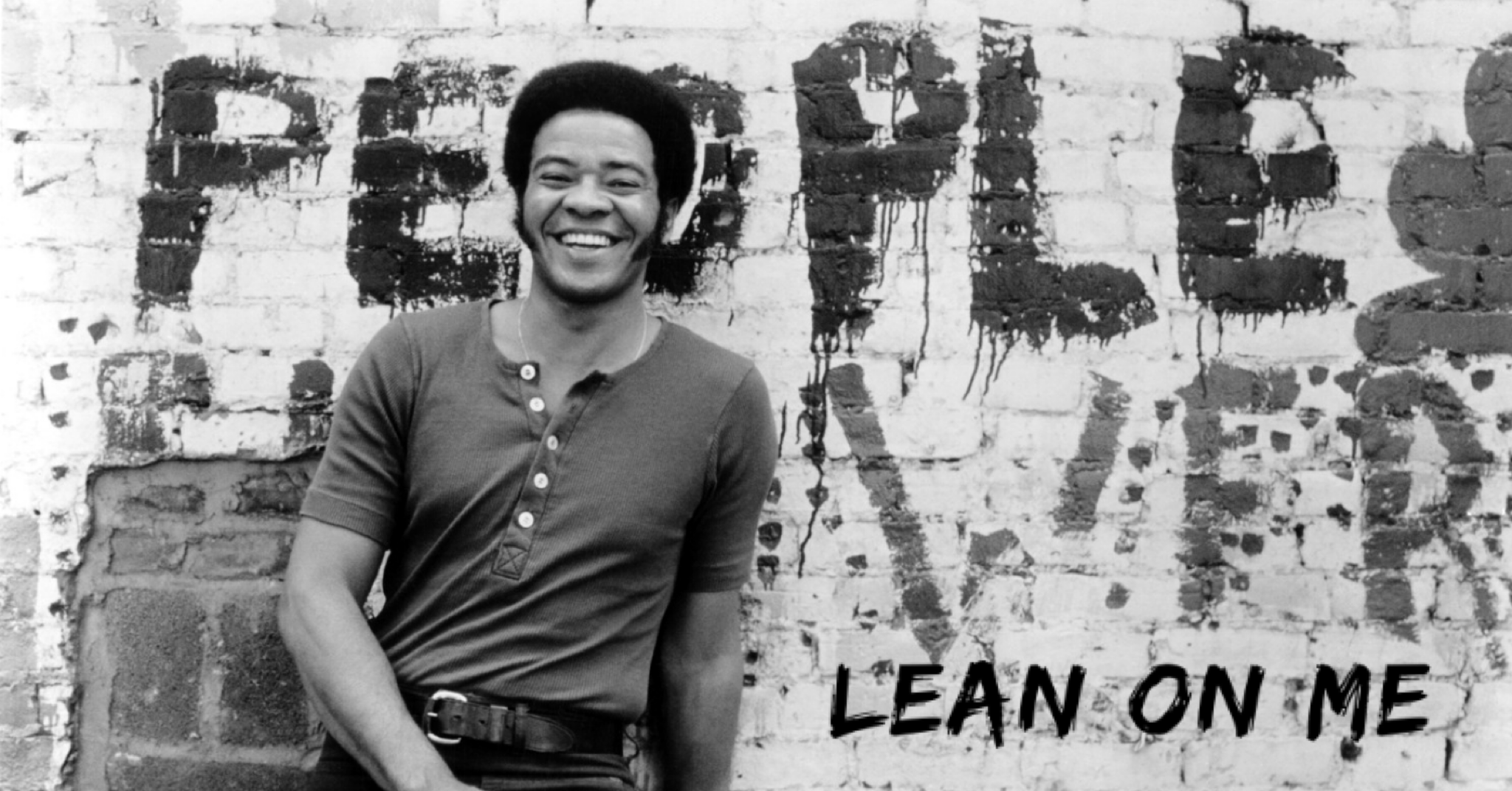
    Waterbrook Bible Fellowship chose the Monday musing topic today. Sunday’s streaming service ended with the song “Lean On Me”. The lyrics might not be found in a dusty old hymnal but the words sung by Bill Withers are spot on for this season.

    Sometimes in our lives
    We all have pain
    We all have sorrow

    Lean on me, when you’re not strong
    And I’ll be your friend
    I’ll help you carry on

    I write a lot about grace in community. Some say too much. To be honest, I have had moments when I wondered if living in community with messy people is worth it. I have come to understand why legalism is so much easier than grace. Legalism allows me to assess the situation and then apply a verse, assign a task and move away in self-righteous expectation. If that person rejects that Biblical admonition or task then legalism allows me to withdraw because they are disobedient. Grace does not give me that option. Grace demands that I move toward the struggle of my brother or sister and not away in judgment. No wonder grace is a tough sell.

    That is the glorious dichotomy of grace. Grace wears me out and lifts me up. Grace frustrates and exhilarates.  My old nature screams that people who make bad decisions over and over get what they “deserve”. They don’t “deserve” to be pursued and loved and restored. They made their bed now let them lay in it. But there is a small quiet voice in my heart that tells me that they have value. That they are loved by their Creator. And that voice asks who am I to decide who “deserves” anything?

    A quote by Pastor Paul Donnan says it far better than I ever could.

    Grace doesn’t treat us better than we deserve. It treats us without the slightest reference to what we deserve. Grace ceases to be grace if God withdraws it upon any human failure. If Grace is in any way tied to something you do, then it is no longer a gift but a wage, and that’s not grace.

    And, to be selfish, the lyrics of Bill Withers tells me why it is in my own best interest to give grace willingly.

    I’ll help you carry on
    For it won’t be long
    Till I’m gonna need
    Somebody to lean on

    Yep. It is just a matter of time until I will be begging for grace for some stupid action or word. Paul knew that was true and reminded the Galatian Church.

    Live creatively, friends. If someone falls into sin, forgivingly restore him, saving your critical comments for yourself. You might be needing forgiveness before the day’s out. Stoop down and reach out to those who are oppressed. Share their burdens, and so complete Christ’s law. If you think you are too good for that, you are badly deceived. (Galatians 6, The Message)

    Why are we so willing to receive grace and not extend it? Maybe the next lyric has a clue.

    Please swallow your pride
    If I have things you need to borrow
    For no one can fill those of your needs
    That you won’t let show

    Pride. Pride causes us to cover our needs because that would show weakness. Pride tells us to wear a mask of false joy so that others won’t know our shame and sin and need. Our Father in Heaven designed this journey to be lived in community. God knows that we need Him and we need one another. So drop the mask of false joy for the approved mask of virus prevention and sing along in muffled harmony.

    We all need somebody to lean on
    I just might have a problem
    That you’ll understand

    We all need somebody to lean on

    Yes it is hard to walk with the wounded. Yes it is frustrating to watch messy people make the same mistakes over and over. Yes it is tiring to give grace to the needy. But my heart’s desire remains the same. These words in Hebrews wrap it up nicely.

    And don’t forget to do good and to share with those in need. These are the sacrifices that please God. (Hebrews 13:16)

    Do the right thing. Help those in need. Pleasing God.

    We all need one another and especially now. Love God this week by being kind to some of His children.

    Want to be more connected to God and one another. Click here.

  • How to Choose Hope and Light over Doom and Darkness

    I remember reading Chicken Little when I was a child. The story tells that a young chick walking along was unexpectedly struck on the head by an acorn. With no further investigation Chicken Little came to the kind of well reasoned conclusion that floods our social media today.

    The sky is falling!

    Today Chicken Little would be an excellent politician or cable news anchor. Every time I violate my own personal mental health policy and turn on the news I am plunged into despair.

    The sky is falling! Look! There is an expert displaying a colorful chart to prove it! Hear me out. I know is important to communicate information for our actions and safety. But the tone and sheer volume of fear mongering is depressing.

    When I fall totally into the abyss and survey social media I see overwhelming fear, anger, gloom, and apocalyptic doom. Again, I understand the need to be informed. But I am beginning to think that fear is the most consistency ingredient for too many sources.

    As a follower of Jesus how do I process this tsunami of doom? I need to remind myself of some fundamental truths that I hold true. I find myself doing this over and over because the noise from the culture can drown out the quiet voice of the Spirit of God. Here is a small dose of my faith vaccine for fear.

    These events are NOT a surprise to God. Violence, hatred, bigotry, and division are a product of a fallen world that will someday be redeemed. Jesus made it very clear that following Him is not a get out of grief card.

    “I have told you all this so that you may have peace in me. Here on earth you will have many trials and sorrows. But take heart, because I have overcome the world.” (John 16:33, NLT)

    Yes, there will be troubles but He has overcome the world. What does that mean?

    It means even in my deepest fear and darkest hour I know that I am loved, adopted, redeemed, and I have the promise of eternity with God. I have hope to sustain me. I am not anxious to leave this world but I am also not afraid. I believe I have an eternal inheritance given as a free gift of grace awaiting me.

    I do my best to obey the laws the authorities lay out for me. I try to be a good neighbor and a responsible citizen. After doing all of those important things I stand on this conclusion drawn by David when he was afraid for his future. His lament sounds like he could have written it today (after watching cable news).

    My heart is breaking
        as I remember how it used to be:
    I walked among the crowds of worshipers,
        leading a great procession to the house of God,
    singing for joy and giving thanks
        amid the sound of a great celebration!

    David was isolated. His days of joyful gatherings were just a memory as he hunkered down alone in fear. But he remembered the key to his joy and thankfulness. He remembered where he placed his hope.

    Why am I discouraged?
        Why is my heart so sad?
    I will put my hope in God!
        I will praise him again—
        my Savior and my God!

    In Psalm 73 the author laments how the wicked seem to prosper and he wonders if his efforts are in vain. Then he recognizes the problem is not the world but the bitterness in his own heart. He acknowledges that he may face troubles but his source of strength is eternal.

    My health may fail, and my spirit may grow weak,
        but God remains the strength of my heart;
        he is mine forever. (Psalm 73:26, NLT)

    The next time the news or a social media influencer is causing your heart to be downcast remember the words of Paul to the church at Corinth.

    “For our present troubles are small and won’t last very long. Yet they produce for us a glory that vastly outweighs them and will last forever! So we don’t look at the troubles we can see now; rather, we fix our gaze on things that cannot be seen. For the things we see now will soon be gone, but the things we cannot see will last forever.”
    (2 Corinthians 4:17-18, NLT)

    Today I choose to focus my gaze on the source of hope and light.

    Jesus.

    Fear causes you to take your eye off of the source of your strength. Keep your eyes on Jesus and the words of a classic old church hymn will begin to ring true in your heart.

    O soul are you weary and troubled?
    No light in the darkness you see?
    There’s light for a look at the Savior
    And life more abundant and free

    Turn you eyes upon Jesus
    Look full in His wonderful face.
    And the things of earth will grow strangely dim
    In the light of His glory and grace.

    I pray that you will choose to focus on the hope and light of Jesus to get you through the cacophony of doom and gloom that surrounds us.

  • Connect 21: Day 20 – The Best Present You Can Give.

    Connect 21: Day 20 – The Best Present You Can Give.

    Every day I am gifted with 86,400 seconds of precious time. I cannot possibly use all of it wisely. But I can invest more of that daily gift into my relationships with God and others. I can’t draw interest on unused time to be used later.

    Time is far more valuable than the money we so doggedly pursue. I can lose all my money and make more later. But if I lose my time, it is gone forever. Solomon actually beat me to this message by about three thousand years, give or take. He decided that, all things considered, the best way to live is to enjoy the moment.

    After looking at the way things are on this earth, here’s
    what I’ve decided is the best way to live: Take care
    of yourself, have a good time, and make the most of
    whatever job you have for as long as God gives you
    life. And that’s about it. That’s the human lot. Yes, we
    should make the most of what God gives, both the
    bounty and the capacity to enjoy it, accepting what’s
    given and delighting in the work. It’s God’s gift! God
    deals out joy in the present, the now. It’s useless to
    brood over how long we might live.
    Ecclesiastes 5:18-20, The Message


    Not to be maudlin, but that is the reality of this earthly existence. We don’t know if we have tomorrow or even the rest of today. Certainly we must be wise to plan and prepare for a long future. But we must also invest in now, in case that is what we are given.

    Maybe the message that resonates the most for me is that we cannot receive postdated grace. We cannot order grace for the future. We receive grace in the now. Grace is God’s greatest gift of my being present with Him. When we are disconnected or distracted, we miss that blessing of real-time grace.

    If I had to write a one-sentence summary of what I learned on this odyssey, it would be very simple. Spend focused time with those you love and with your God. Speaker-writer Zig Ziglar wrote about spending time with loved ones.

    “One of these days you will say either, ‘I wish I had,’ or ‘I’m glad I did.’”

    How heartbreaking would it be to find yourself at the end of this pilgrimage with the regret of “I wish I had” roiling in your soul? My heart’s desire is that I will gratefully say, “I’m glad I did.” If you want to give the very best present to your spouse, kids, friends, and God, the grace challenge is simple.

    Be present.

    I have never forgotten what entrepreneur Mary Crowley said to me when we were discussing the challenge of parenting. Mary said she had one regret. “I wish I had answered at the first tug.” That is simply being present.

    If a friend is suffering, you can show no greater love than to simply be there for him or her. Not offering great theological insight or stories of your own or other’s suffering. Just to be present.

    When you talk to a friend, be present. Not looking around as if your friend is merely a temporary diversion before someone more compelling comes along. That is the best thing we can give to others. Nothing makes a person feel more valued than being fully present.

    Being present is the best worship we can give to God. We can sing and raise hands in worship to God, and that is good. We can talk about His love and forgiveness, and that is good. But nothing communicates our adoration for God more than being fully present with Him.

    The enemy will remind you over and over of all that needs to be done. He will remind you of past wounds and failures. It would be wise to remember a couple of things at this point. Jesus has experienced exactly what you are going through right now. He was tempted in the desert by Satan. He was tired, hungry, and lonely. Jesus experienced this trio of circumstances that often cause me to yield to temptation, and He conquered them with a simple strategy. Jesus focused on the Father and rebuked Satan with Scripture. First Jesus was tempted to gratify His extreme hunger by turning the stones into bread. Then the Accuser taunted Jesus to prove His divine status by throwing Himself off the Temple and to be rescued by attending angels. The Message colorfully describes the third temptation of Jesus.


    For the third test, the Devil took him to the peak of a
    huge mountain. He gestured expansively, pointing out
    all the earth’s kingdoms, how glorious they all were.
    Then he said, “They’re yours—lock, stock, and barrel.
    Just go down on your knees and worship me, and
    they’re yours.”
    Jesus’ refusal was curt: “Beat it, Satan!”

    I cannot tell you how much I love the image of Jesus turning to the enemy and telling him to “beat it.”

    The story continues. He backed his rebuke with a third quotation from
    Deuteronomy:

    “Worship the Lord your God, and only him. Serve him with absolute single-
    heartedness.” The Test was over. The Devil left. And in his place, angels! Angels came and took care of Jesus’ needs. Matthew 4:8-11, The Message

    There is so much good stuff in those verses. Jesus’ rebuke was backed by the Word of God. That gave authority to the command to “beat it.” I can have a colleague tell me that I should complete a task at work. I may or may not do it. I can have a peer tell me. I may or may not respond. But when the boss tells me to do it, the job will certainly get done. He or she has authority. I am under that authority to obey, unless I make the bad choice of not responding, which may mean I will be looking for another job. That is what was going on here. Satan has power, but it is limited. God has the authority, and Jesus simply used that power.

    Serve Him with absolute single-heartedness. Be present. We cannot multitask and be fully present with God.

    Some anonymous person summed it up perfectly. People who have a lot of money and no time we call “rich.” People who have time but no money we call “poor.” Yet the most precious gifts—love,friendship, time with loved ones—grow only in the sweet soil of unproductive time.

    The world might call quiet moments of presence with God and others unproductive time. I am learning that there is no more productive way we can spend our time. Everything that truly matters springs from that presence-enriched soil.

    My heavenly Father is always present. I just need to show up for Him. That is the essence of spiritual growth for me. Just showing up in humility every day, seeking His presence.

    I will stumble in this journey to be present. I probably will need a refresher course often. But I am confident beyond confident of one truth that Paul wrote to the church at Philippi, which is true for you and me today.

    I am certain that God, who began the good work within
    you, will continue his work until it is finally finished on
    the day when Christ Jesus returns.
    Philippians 1:6


    I am waking up slowly in this life. But one day, fairly soon, I will wake up glorified. I believe the epithet written on Ruth Graham’s tombstone will also describe my journey: “End of construction—thank you for your patience.”

    Excerpts from Waking Up Slowly

  • 21 Connect: Day 18 – The Value of Silence

    21 Connect: Day 18 – The Value of Silence

    It comes as no surprise that the Bible regularly addresses our need for silence and solitude.


    Let all that I am wait quietly before God,
    for my hope is in him.
    He alone is my rock and my salvation,
    my fortress where I will not be shaken. Psalm 62:5-6


    Perhaps the most consistent role model for the need for solitude and silence was Jesus.


    Very early in the morning, while it was still dark, Jesus
    got up, left the house and went off to a solitary place,
    where he prayed. Mark 1:3-5, NIV

    Jesus often withdrew to lonely places and prayed. Luke 5:16, NIV

    Jesus went out to a mountainside to pray, and spent the
    night praying to God. When morning came, he called
    his disciples to him and chose twelve of them. Luke 6:12-13, NIV

    Jesus, knowing that they intended to come and make
    him king by force, withdrew again to a mountain
    by himself. John 6:15, NIV

    Jesus understood the need to recenter and reconnect with the Father. He understood the power of quiet to be able to hear the voice of His Father. How can we think we are able to function spiritually and emotionally without occasional silence and solitude? This is not something I am accomplished at. I have probably had more intentional, undistracted time during this pandemic than I have had in years, if not ever.

    Noise becomes a habit. If I am alone, I used to need the television in the background or music in my ears. I am learning that sometimes I just need silence.

    A. W. Tozer said that “only after all the noise has spent itself do we begin to hear in the silence of our heart, the still, small, mighty voice of God.”

    That requires us to slow down, give up our perceived control, and simply be quiet. I can tell you it does not come naturally in this culture. Being alone and quiet so you can hear the still voice of the Holy Spirit is about a heart attitude more than location. For me, there is one really important benefit of reflective quiet in the presence of God: it interrupts my typical prayer time of delivering a monologue to God. I was taught to make my requests known in prayer after a little perfunctory praise. I went down my list, and I was done. One-way conversation.

    I am outta here!

    Forcing myself to be quiet gives me a chance to look inward. To see where I might need to allow the light of God’s grace to shine on some dark area. I allow myself to be fully in the moment and not worried about tomorrow. I allow myself the time to reflect on who I am and how the Father looks at me. It clears my mind to clearly think about what needs to be done. I remind myself that I don’t have to constantly manage and be in control.

    Be still, and know that I am God! (Psalm 46:10)

    The Hebrew word for “be still” might be better translated as “cause yourselves to let go” or “let yourselves become weak.” I have had to learn to slow down, unplug, and be still. And I have had a major surprise: I am really enjoying it.


    It is a lesson I intend to build on. God is powerful enough to teach an old dog new tricks. I invite you to find a place to be quiet today. In the sounds of silence, God may very well meet you.

    Excerpts from Waking Up Slowly

  • Connect 21: Day 17 – Words Matter…A Lot

    Connect 21: Day 17 – Words Matter…A Lot

    I am saddened, sickened, disturbed, and frightened at how the word hate is being hurled around in our national discourse. Red-faced politicians spew vitriol at those they disagree with. It can be an honest and complicated issue, but they reduce the debate to hating their opponents. Author James Baldwin made this insightful observation:

    “I imagine one of the reasons people cling to their hates so stubbornly is because they sense, once hate is gone, they will be forced to deal with pain.”

    Isn’t that the truth? It is so much easier to demonize than to understand. It is up to me and to you to change the discourse. The politician’s favorite tactic of justifying bad behavior with other bad behavior does not work with a holy God. Frankly, I am grateful He loves me too much to give me a pass on my blindness. Pastor Mark Mitchell is one of many people who has reflected on Rabbi Joseph Telushkin’s assessment of the power of words.


    Rabbi Telushkin, author of Words That Hurt, Words That Heal, has lectured throughout this country on the powerful, often negative impact of words. He often asks audiences if they can go 24 hours without saying any unkind words about, or to, another person. Invariably, a small number of listeners raise their hands, signifying “Yes.” Others laugh, and quite a few call out, “No!”
    Telushkin responds, “Those who can’t answer ‘yes’ must recognize that you have a serious problem. If you can’t go 24 hours without drinking liquor, you’re addicted to alcohol. If you can’t go 24 hours without smoking, you’re addicted to nicotine. So if you can’t go 24 hours without saying unkind words about others, then you’ve lost control over your tongue.”


    Hate is a very serious word to use when talking about anyone, and especially another believer. As Christians, we simply do not have that option. Try to avoid these verses at your own peril.


    If someone says, “I love God,” but hates a fellow believer,
    that person is a liar; for if we don’t love people we can see,
    how can we love God, whom we cannot see? (1 John 4:20)

    If anyone claims, “I am living in the light,” but hates a fellow believer, that person is still living in darkness.
    (1 John 2:9)


    Ouch. It’s very clear—and uncomfortable to hear—that I need to pray for those I disagree with in the faith community. But beyond that, I think we need to be extraordinarily prayerful about throwing the hate card at anyone.

    Martin Luther King Jr. had some legitimate reasons to hate, but he chose not to. His words have not lost their power:

    “I have decided to stick with love. Hate is too great a burden to bear.”

    Another courageous African-American, Booker T. Washington,
    made a similar choice.

    “I will permit no man to narrow and degrade my soul by making me hate him.”

    I know there are some people who are so evil that they seem unredeemable outside of a true miracle. But I have found that the majority of folks who disagree with me are generally decent people, when I take the time to hear their stories and get to know them. We hate people we don’t know and, without a doubt, that suspicious attitude prevents us from ever engaging with them.

    I have decided to severely curtail my use of the word hate. I am making the choice to permit no man to degrade my soul by making me hate. And for the spiritual hall monitors, be aware that I am not going squishy on sin. There are actions, attitudes, and sins that I hate.

    I have to remind myself that the actions that make me angry are the result of our fallen nature and sin. Hating people will not fix either of those issues. I can’t influence hearts by using inflammatory words. Words do matter. A lot.

    Excerpts from Waking Up Slowly Book